
The complete guide
The Practical Buyer's Guide to Wire-Free Robot Lawn Mowers
The real problem with mowing
Mowing is not hard work. It is badly timed work. It always needs doing on the one afternoon you had free, and the longer you leave it the worse it gets, because grass does not wait politely. Skip a fortnight in growing season and you are no longer mowing, you are harvesting. The clippings come off in wet mats, the catcher fills three times, and the lawn looks yellow and shocked for a week afterwards.
A robot lawn mower solves this by changing the frequency rather than the effort. Instead of one long cut every week or two, it takes a small amount off very often. The grass never gets long enough to clump, the clippings are short enough to vanish back into the turf, and the lawn stays at a steady height instead of swinging between shaggy and scalped. You stop thinking about it, which is really the point.
Why wire-free changed things
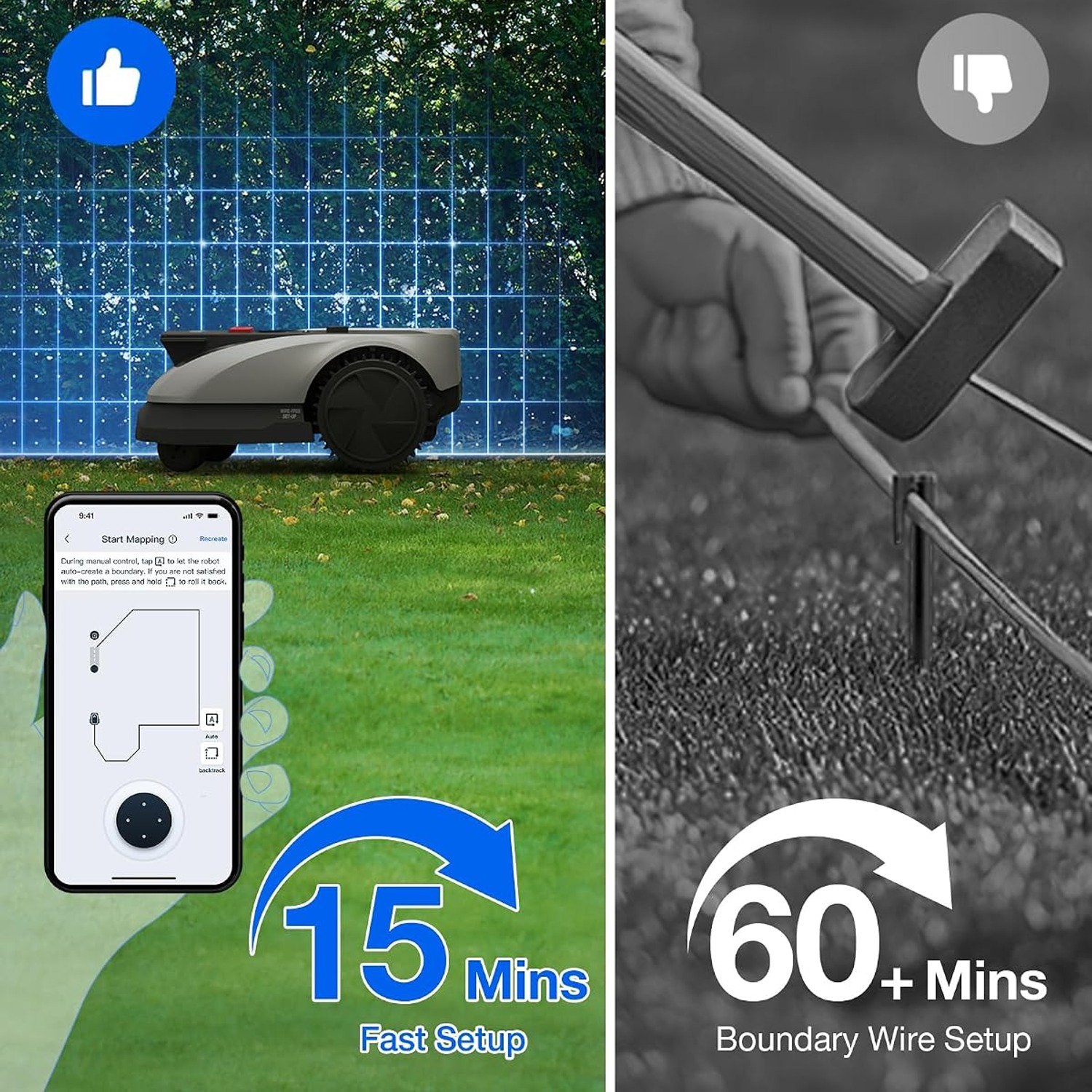
The first generation of robotic mowers worked, but the installation put a lot of people off. You had to run a perimeter wire around the entire lawn and around every garden bed, island, tree ring and path, pegging it down or burying it. If you ever cut it with an edger or a spade, the mower stopped working and you had to find the break.
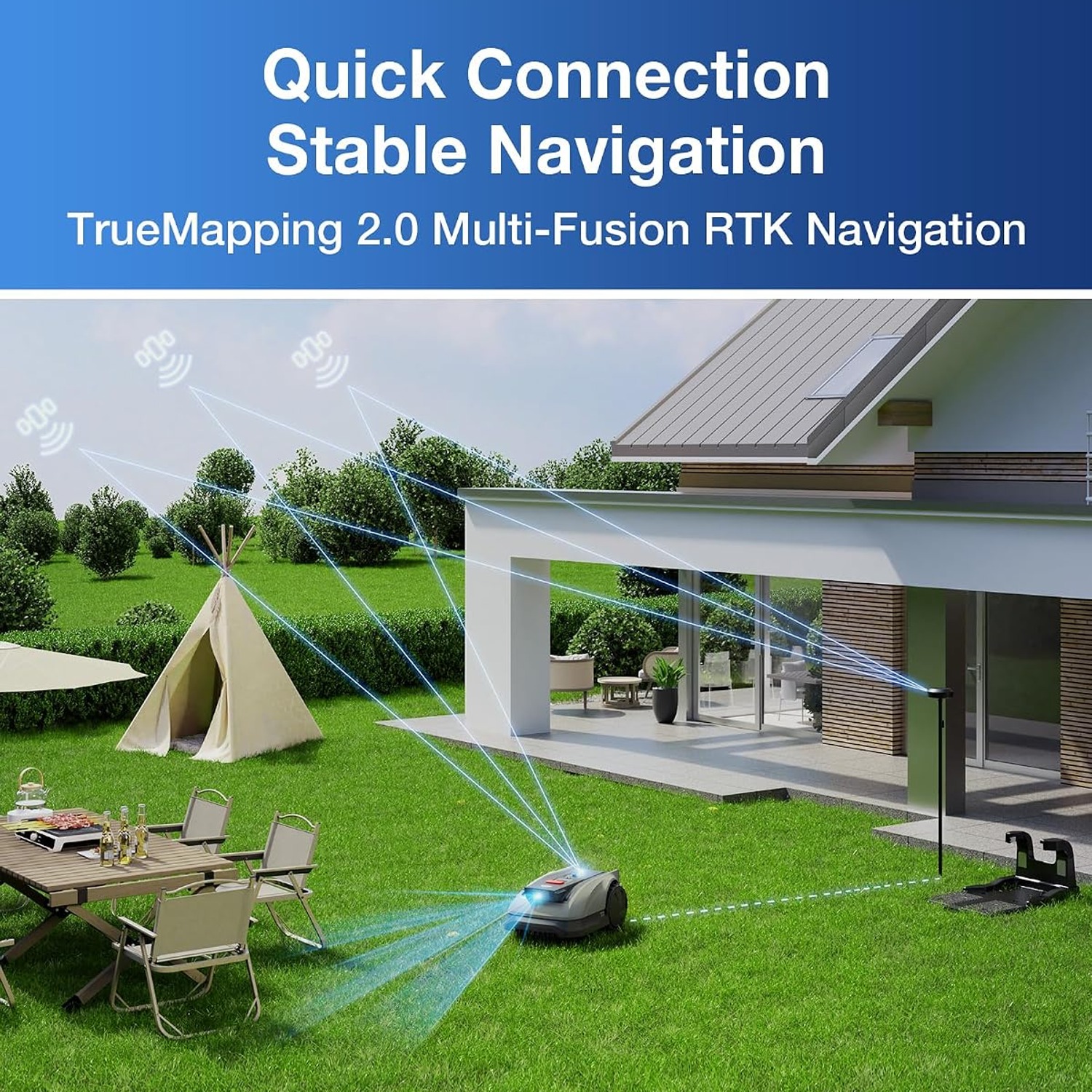
RTK navigation removes that step. RTK stands for real-time kinematic positioning, a satellite method that is far more precise than standard GPS, usually down to centimetre level. A small reference station sits in a fixed spot in your garden and corrects the mower's position constantly. The GOAT O600 RTK uses what ECOVACS calls TrueMapping 2.0 multi-fusion navigation, which combines RTK with onboard sensing so the mower knows exactly where it is. You walk the boundary once with the app, the map is saved, and that is the installation finished. ECOVACS puts setup at roughly ten minutes.
The practical benefit is flexibility. Change a garden bed next spring and you redraw the map in the app rather than digging up and relaying wire. Anyone shopping for a wire free robot mower is really buying that freedom more than anything else.
What the numbers actually mean
Specs on a mower box can feel abstract, so here is how they translate to your yard.
Cutting width is 19cm. That sounds small next to a push mower, and it is, but width matters much less when the machine runs on its own schedule. A narrow deck turns more neatly around beds and fits through tighter gaps, and the mower simply runs more often to make up the coverage.
Cutting height runs from 3cm to 8cm in 0.5cm steps, adjusted in the app rather than by crawling around with a lever. That range covers most common lawn grasses. Lower settings suit fine, dense turf. Higher settings are kinder in heat and drought, because longer leaf shades the soil and holds moisture.
Runtime is 45 minutes with a 55-minute recharge. That cycle repeats on its own. You do not stand there timing it. A 600m2 area gets covered across multiple runs rather than in one heroic session.
Slope rating is 45%, about 24 degrees. Most suburban lawns fall well under that. If you have a genuine bank rather than a gentle rise, measure it before you commit. Narrowest passable gap is 0.7m, which is usually enough for the strip between a house wall and a fence.
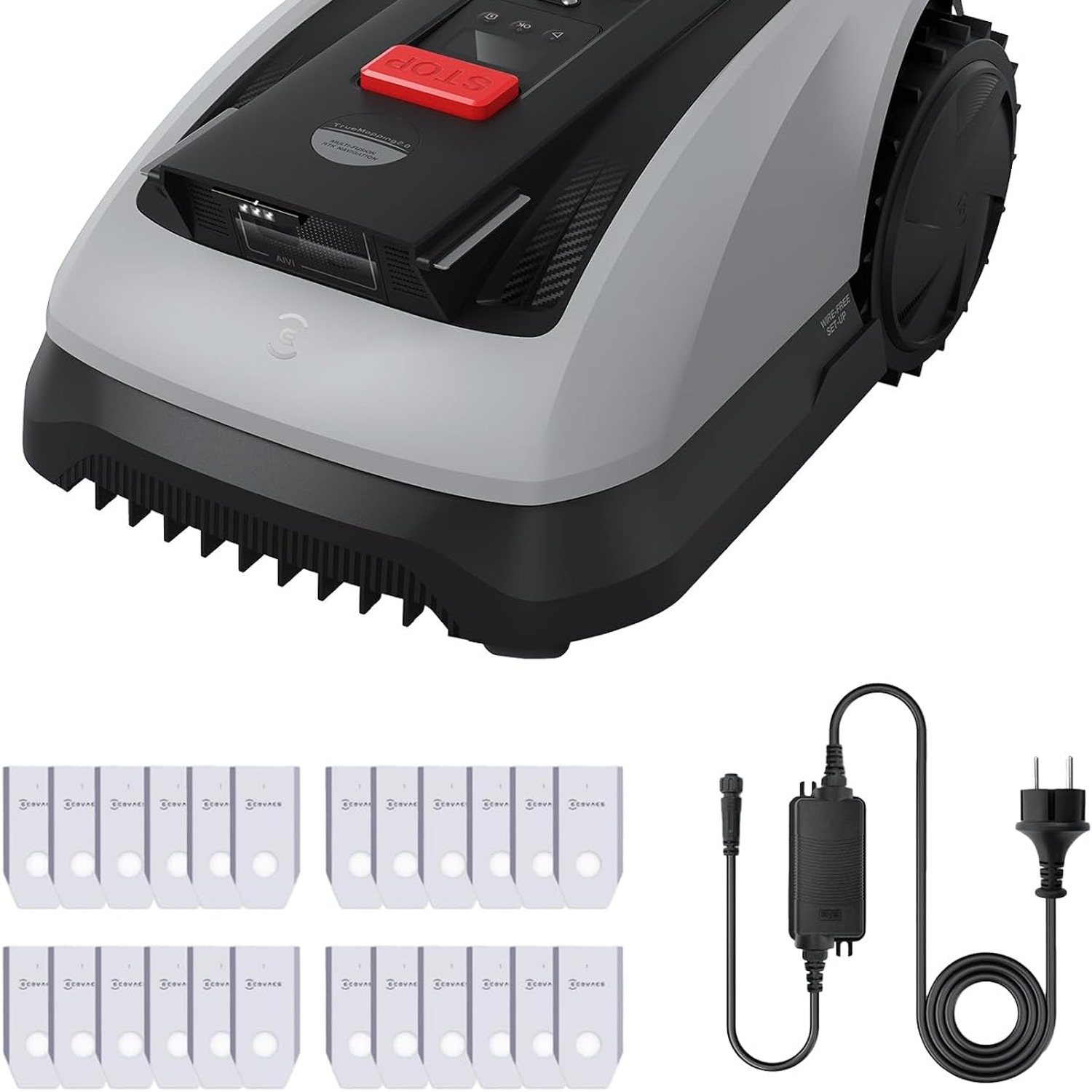
Weight is 20.2 kg, and dimensions are 74 x 33 x 46 cm. It is solid, which helps it stay planted on grass, but one person can lift it into a shed.
Obstacles, edges and the things that actually go wrong
Two things decide whether a robotic mower earns its keep or annoys you. One is what it does when something is in the way. The other is how close it gets to edges.
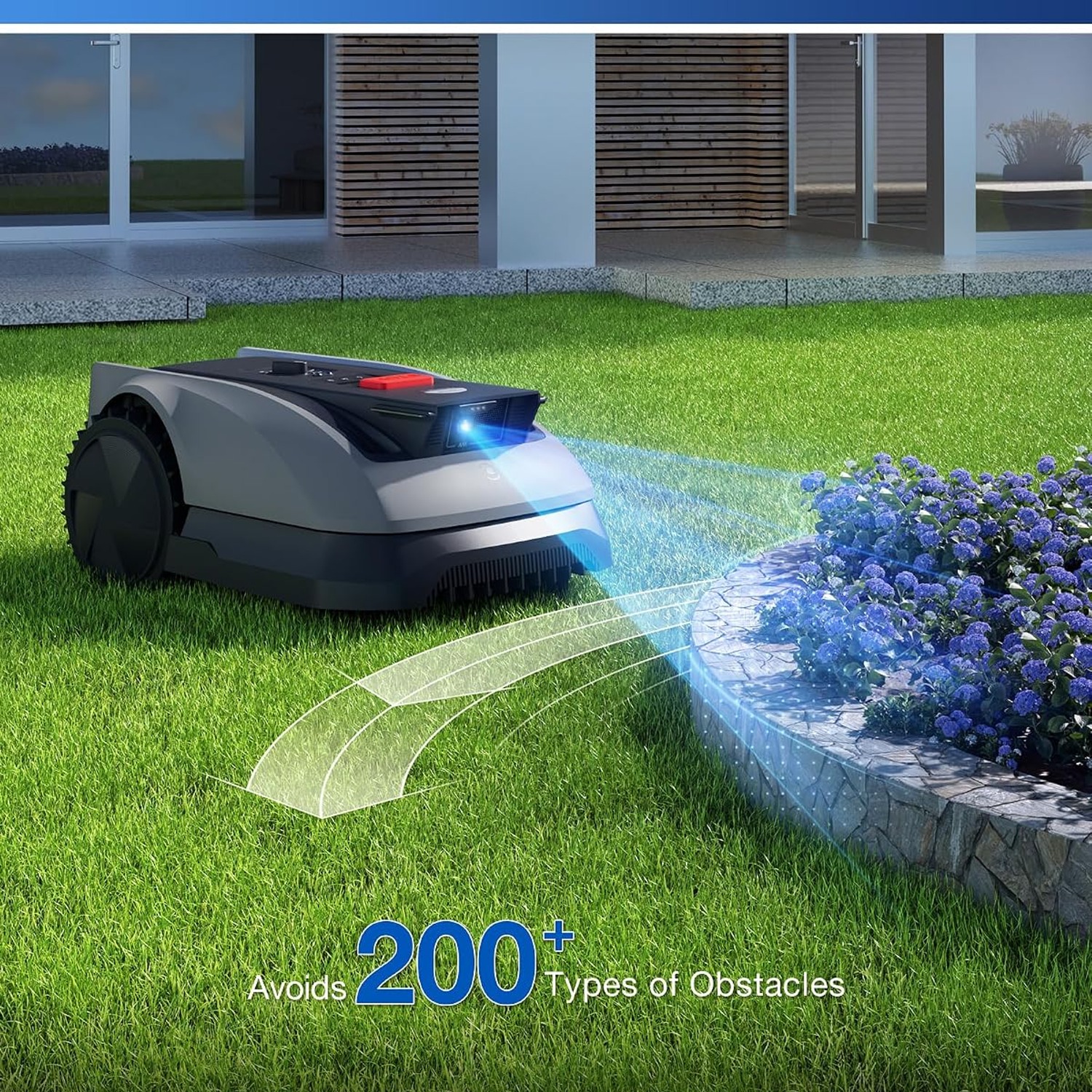
The O600 RTK carries an AI camera that recognises over 200 object types and avoids them. In practice that means a hose left out, a kid's ball, a trowel or a wandering animal. Without good obstacle recognition you end up doing a sweep of the lawn before every run, which defeats the purpose of automation. A robot mower with obstacle avoidance is worth paying for.
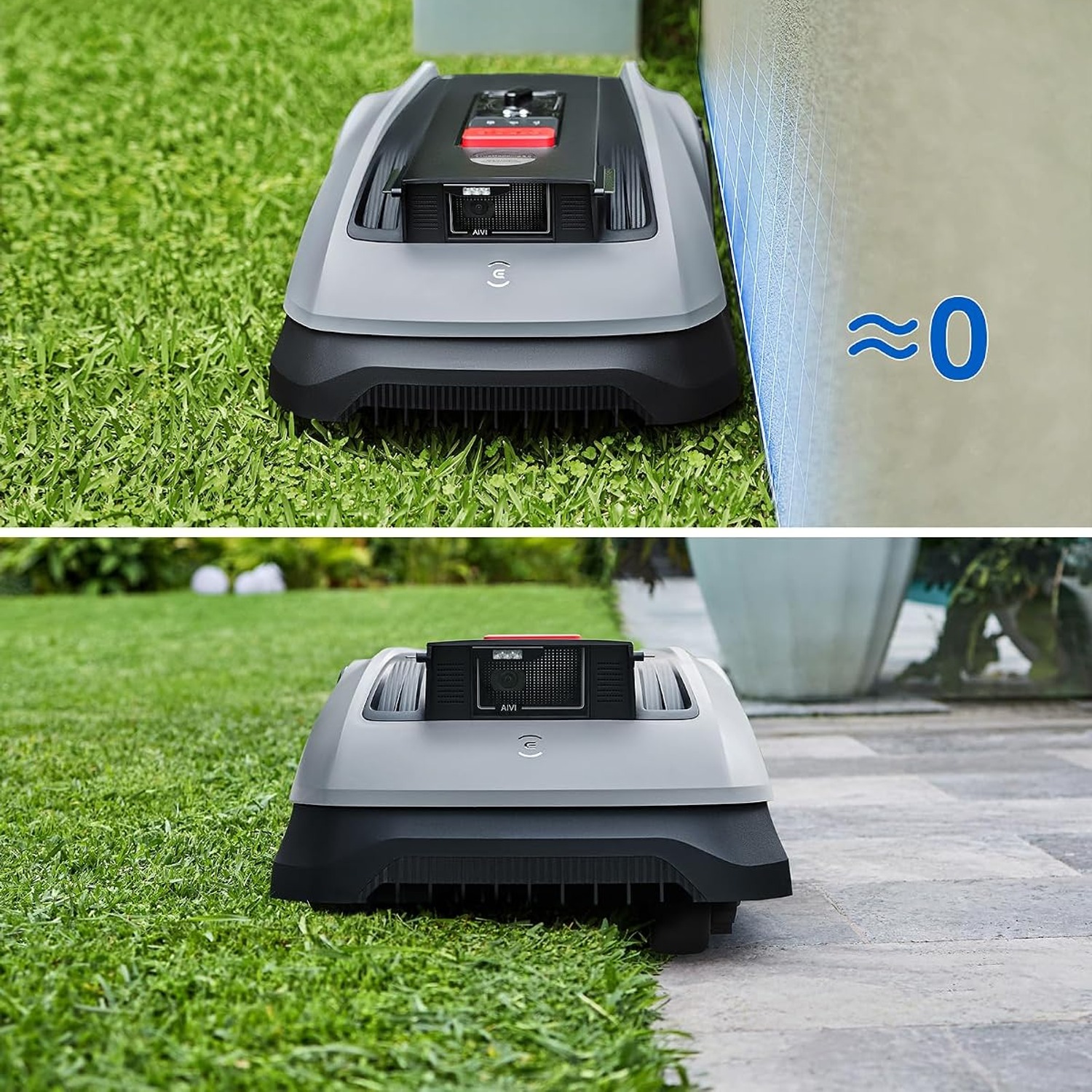
Edges are the other half. Plenty of mowers leave a fringe around the boundary that you have to trim by hand, which again eats into the time saved. TruEdge edge mowing here cuts as close as 10.5cm to a border with zero cross-boundary overrun, meaning it will not wander into the garden bed or over a path. You will still edge hard surfaces occasionally for a crisp line, but not every week.
Who this suits, and who it does not
This suits someone with a normal suburban block, some slope, a few garden beds and maybe a narrow side path. It suits people who want the lawn to just be done rather than a weekend project. It also works well for anyone who travels or has physical limits that make pushing a mower unpleasant.
It is less suited to very large acreage, where you want something with a bigger deck and bigger battery. It is also not the answer for a lawn that has been left to grow long. Cut that back with a conventional mower first, then hand over to the robot for maintenance. Robots trim, they do not rescue.
If your garden has heavy, unbroken tree canopy over most of the lawn, talk through the layout before ordering. The TrueMapping system is designed to hold position under trees and near buildings, with roughly 30% more stable positioning and four times faster satellite connection than earlier systems, but dense cover is the toughest condition for any satellite-based machine.
How to choose between models
Work through four questions before you buy any RTK robotic lawn mower.
How much lawn do you actually have? Pace it out or check a satellite map. People routinely overestimate. This model is positioned for up to 600m2.
What is your steepest slope and narrowest gap? Those two numbers rule models in or out faster than anything else.
How tidy do you want the edges? If you hate trimming, edge performance should rank high on your list.
What is your weather like? An IPX6 rating, as this unit has, means rain and hose cleaning are both fine. In a wet climate that matters a lot.
Looking after it
Maintenance is light but not zero. Turn the mower off before you tip it over, then brush clipping build-up off the underside of the deck. A plastic scraper helps on dried-on residue. Rinse it when it needs it, the IPX6 rating covers that, then let it dry.
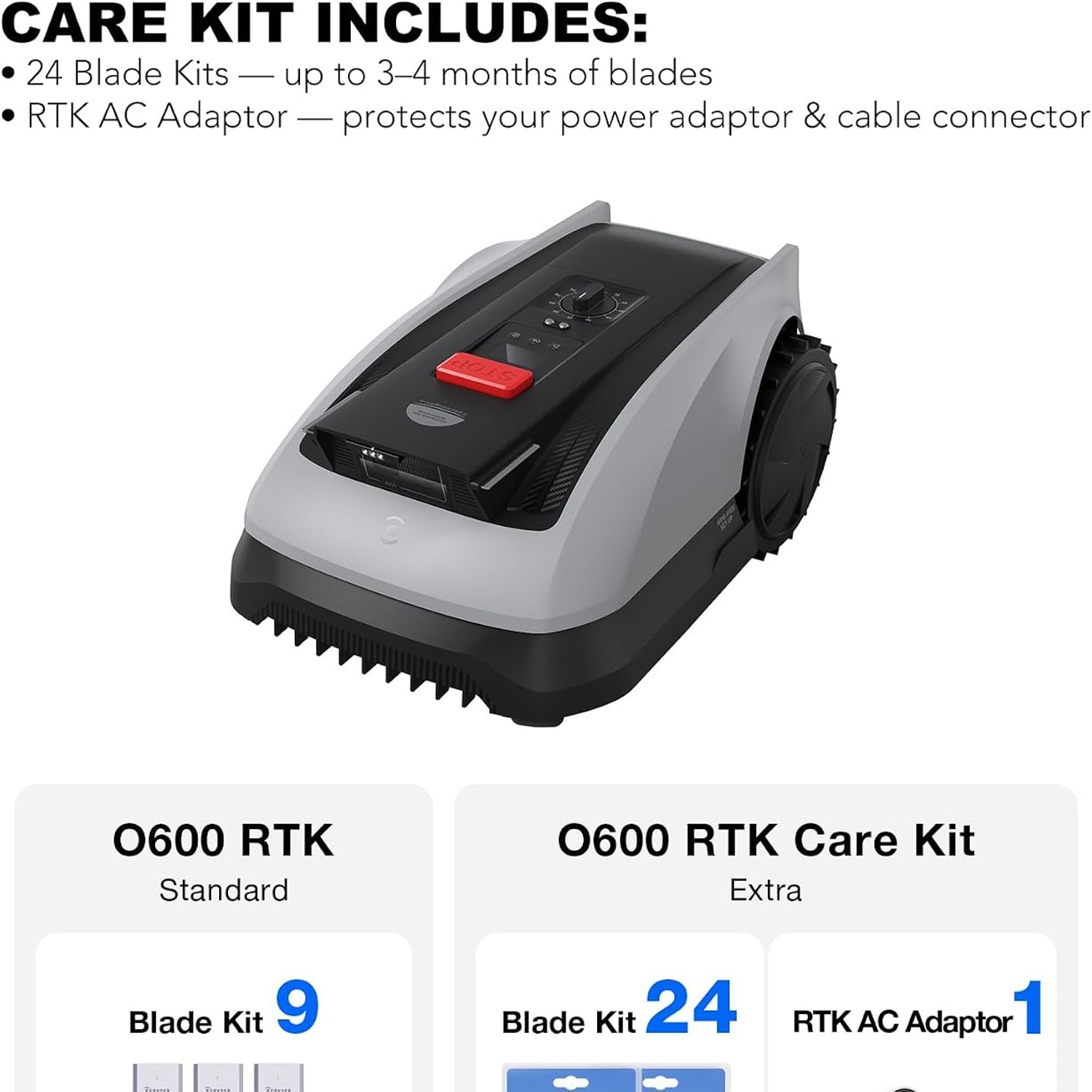
Blades are the main consumable. Replace them when they go dull, chipped or bent. Sharp blades slice the leaf cleanly, dull ones tear it, and torn grass browns at the tip and looks sickly across the whole lawn. The Care Kit version of this product includes 24 spare blades plus a high-precision RTK power adapter, which is a sensible buy if you want to be stocked up.
Over winter or any long break, store the mower and base somewhere dry and sheltered. Keep the reference station mount clear so it has the best possible view of the sky when you start up again.
The short version
The GOAT O600 RTK is a wire-free, app-controlled robot lawn mower built for the kind of garden most people actually have. No boundary wire to lay. A ten minute setup. An AI camera that avoids the things lying around on your grass, edge cutting to 10.5cm, slopes to 45%, gaps down to 0.7m, and a 3 to 8cm cutting height you set from your phone. It is grey, it weighs 20.2 kg, it needs no assembly, and it is rated IPX6 so rain does not stop it.
Check your lawn size, your steepest slope and your tightest gap against the specs. If they fit, this is a machine that quietly removes a recurring chore from your week and keeps the lawn looking better than you would manage by hand.