
The complete guide
Hover Mowers Explained, A Practical Buyer's Guide
The lawn that fights back
Some lawns are easy. Flat, square, one big open run you can knock out in fifteen minutes. Plenty of lawns are not like that.
They have a bank by the driveway. A strip down the side of the house barely wider than a wheelbarrow. Lumps where tree roots push up, hollows where the ground settled years ago, and three garden beds you have to steer around every single time. Push a heavy wheeled mower across that and it scalps the high spots, skips the dips, and you spend half the job reversing out of corners.
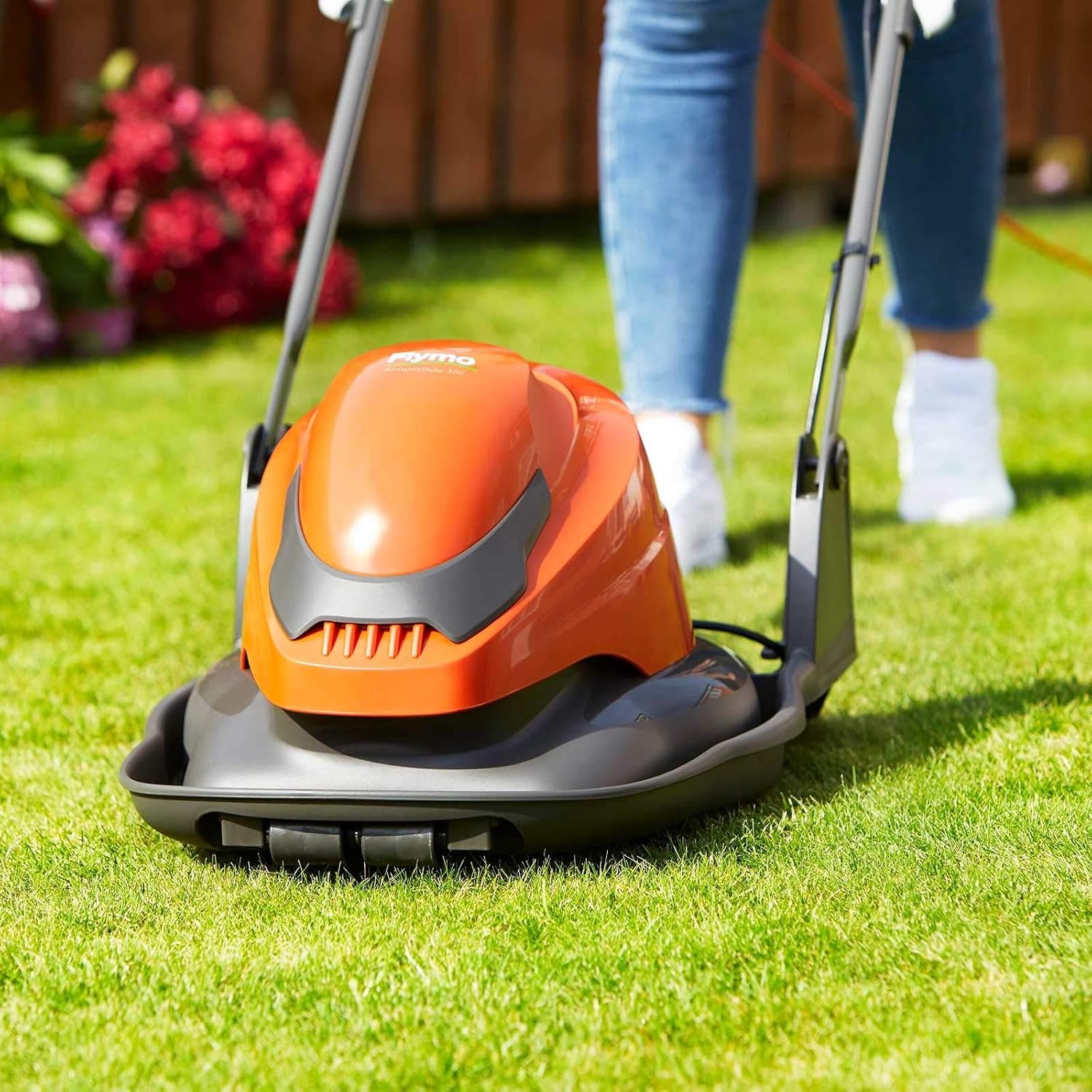
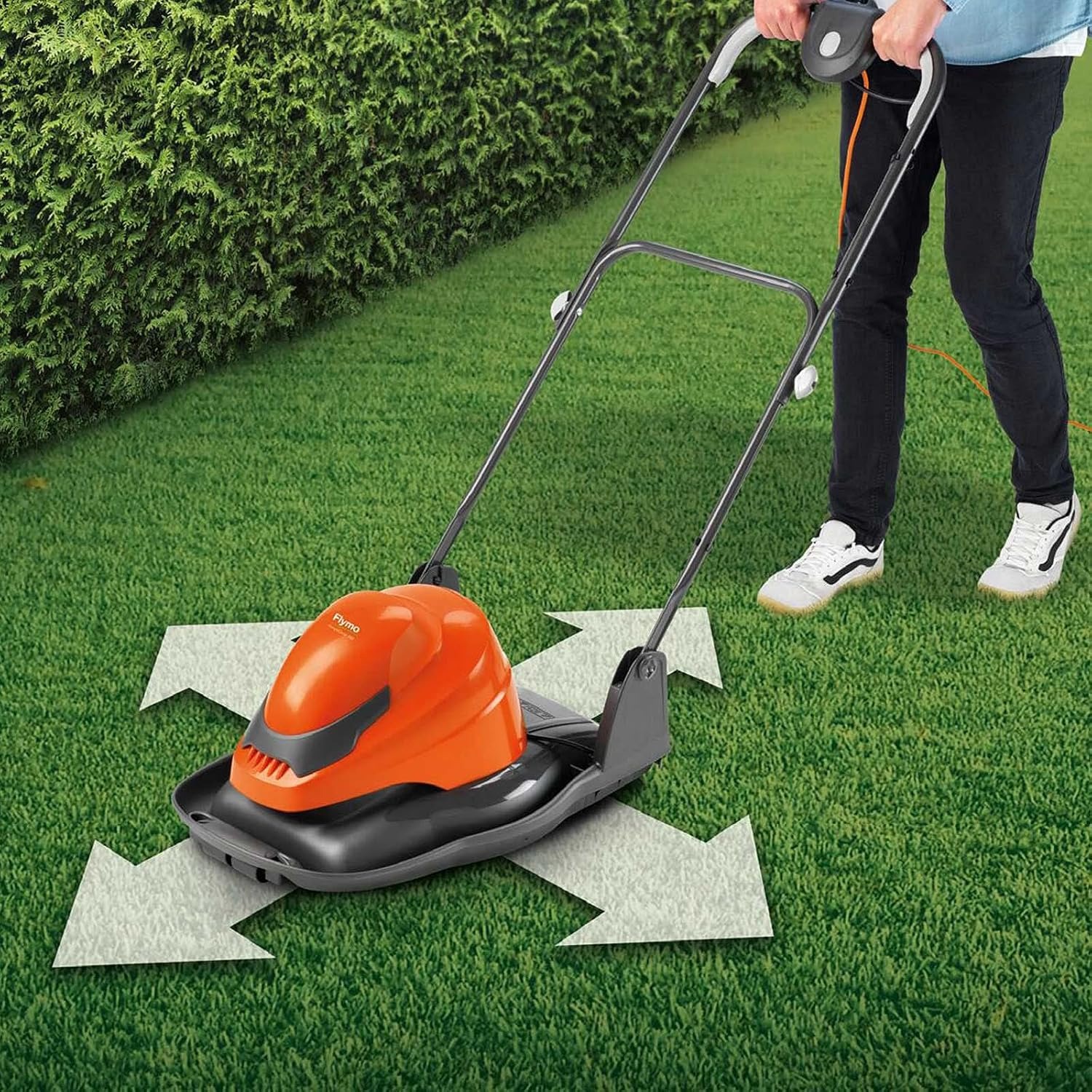
A hover mower takes a different approach. It does not roll. It floats.
How floating actually works
Underneath, the motor spins a blade. Attached to that same spinning assembly is an impeller, which is just a fan that pushes air downwards. The air gets trapped between the base of the mower and the ground, and the pressure lifts the whole machine a fraction clear of the grass.
Once it is up, friction almost disappears. You can slide it left, right, forward or in a wide arc with one hand on the handle. There is no deck grinding through turf and no wheels to drop into a rut. On rough ground that is a genuine improvement, not a marketing line.
It also means you can hold the mower slightly off the vertical to reach a sloping bank, which is awkward or unsafe with a heavier wheeled machine.
The trade-off is honest enough. Hover mowers suit grass that is cut regularly. If you let a lawn grow to ankle height and beyond, the airflow gets choked and the cut suffers. Keep a routine and the machine rewards you.
What you get with this one
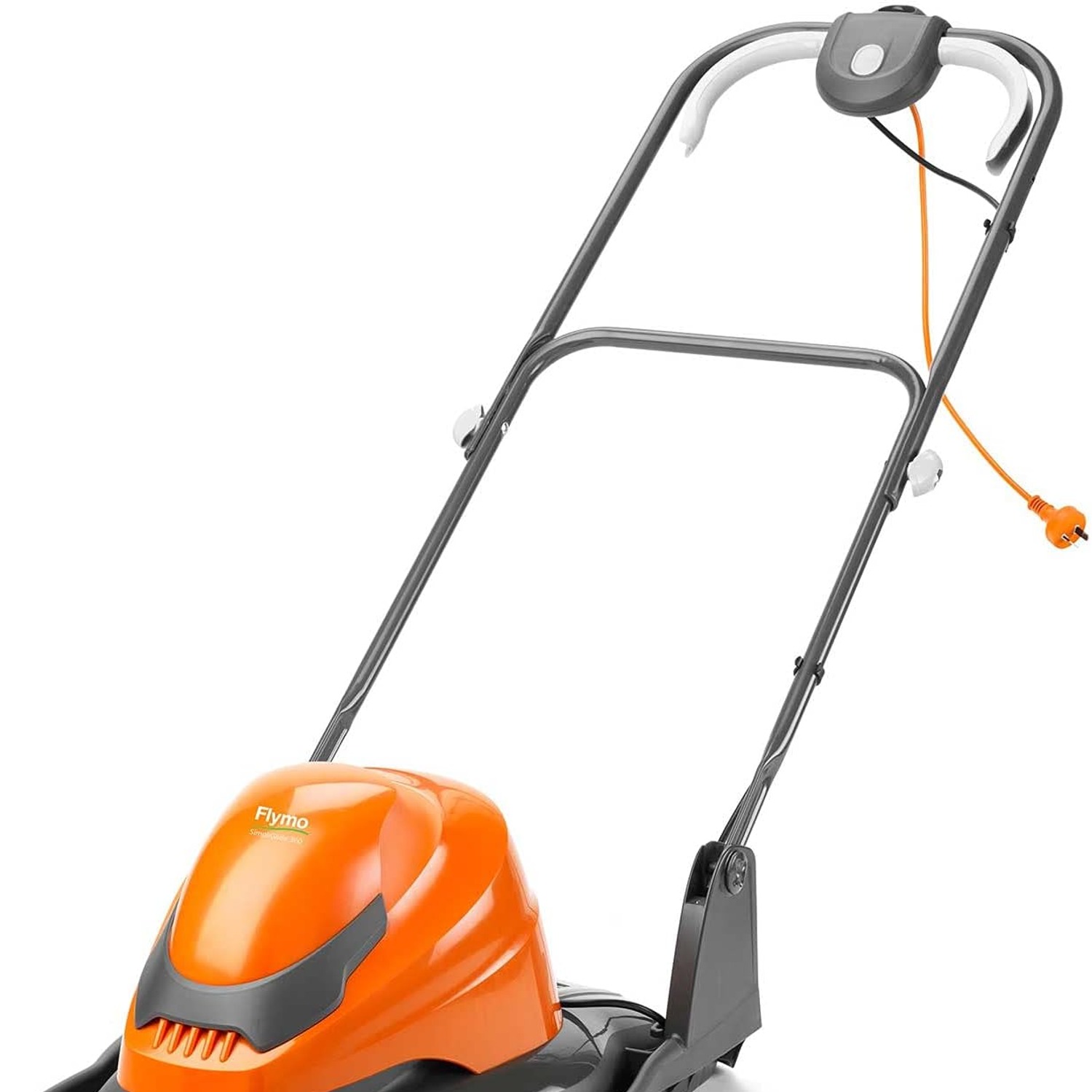
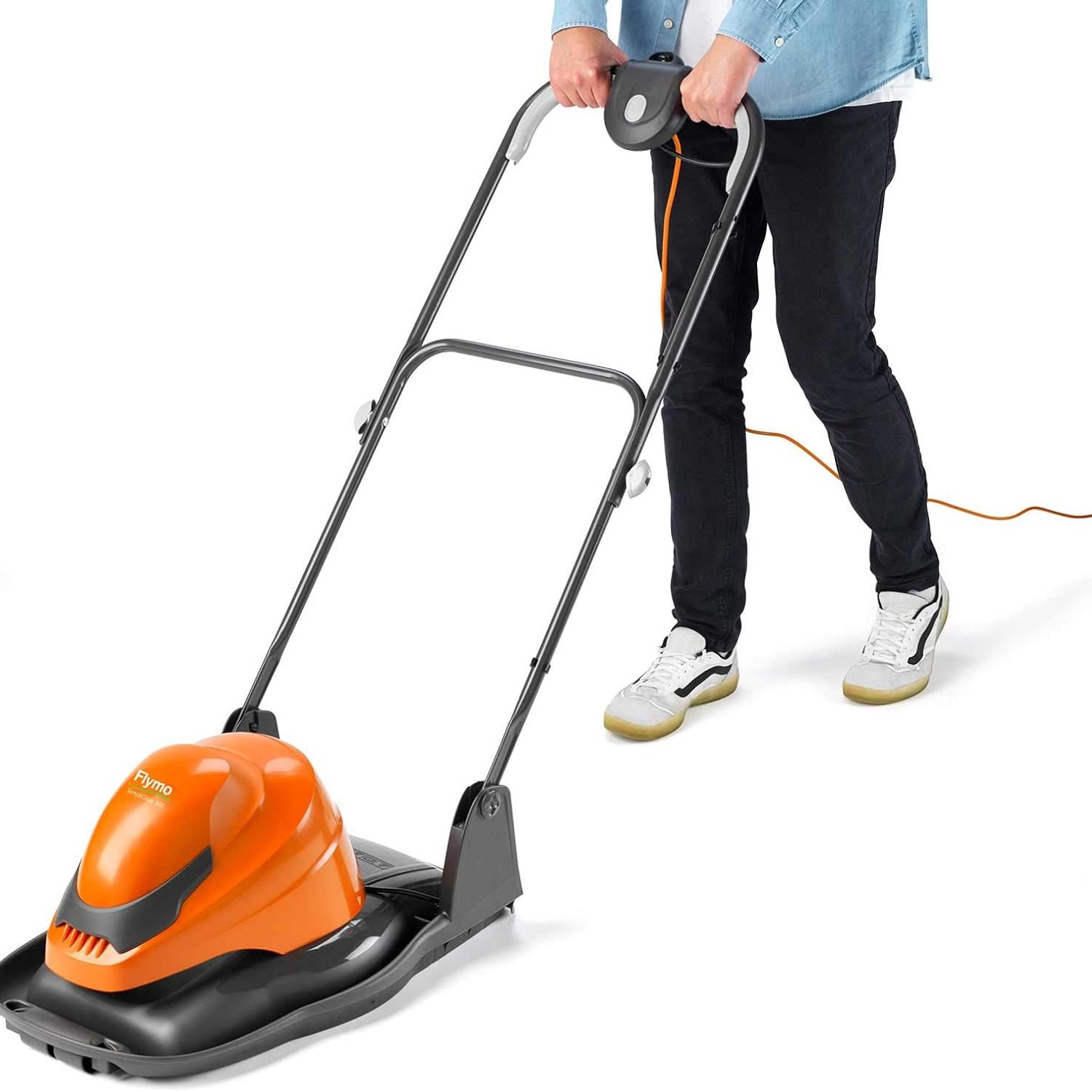
The Flymo SimpliGlide 360 cuts a 36 cm strip. For a small to mid-sized lawn that is a sensible balance. Go much wider and the mower becomes harder to thread between shrubs. Go narrower and you are walking more lengths than you need to.
The whole machine weighs 6.9 kg. Pick that up and it feels like a full shopping bag, not a piece of garden machinery. That matters when you need to carry it down steps, lift it over a low wall, or hold it steady on a verge.
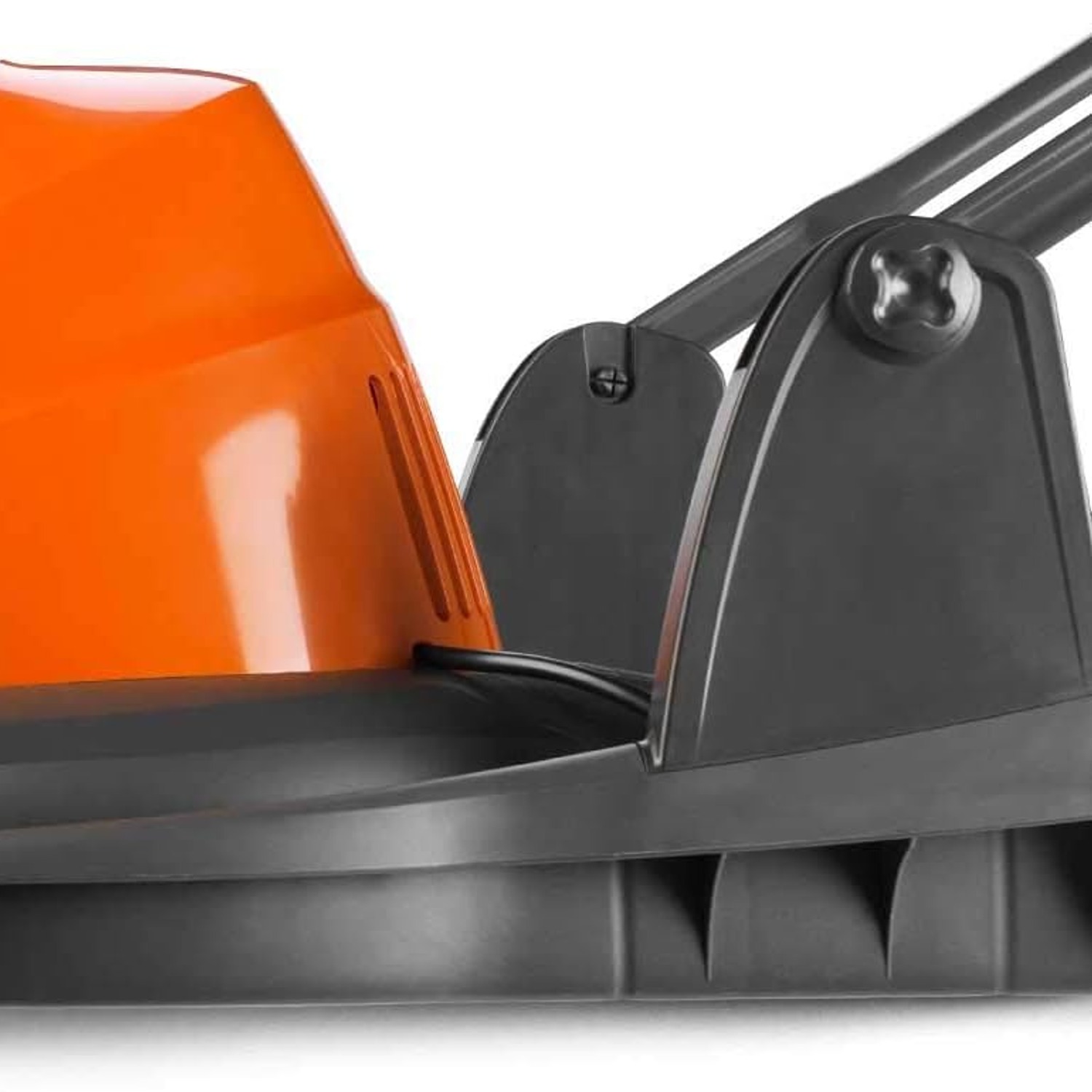
The body and base use ABS plastic. It is the same family of plastic used in things that get knocked about daily. It takes scuffs from kerbs and fence posts without cracking, and it keeps the overall weight low.
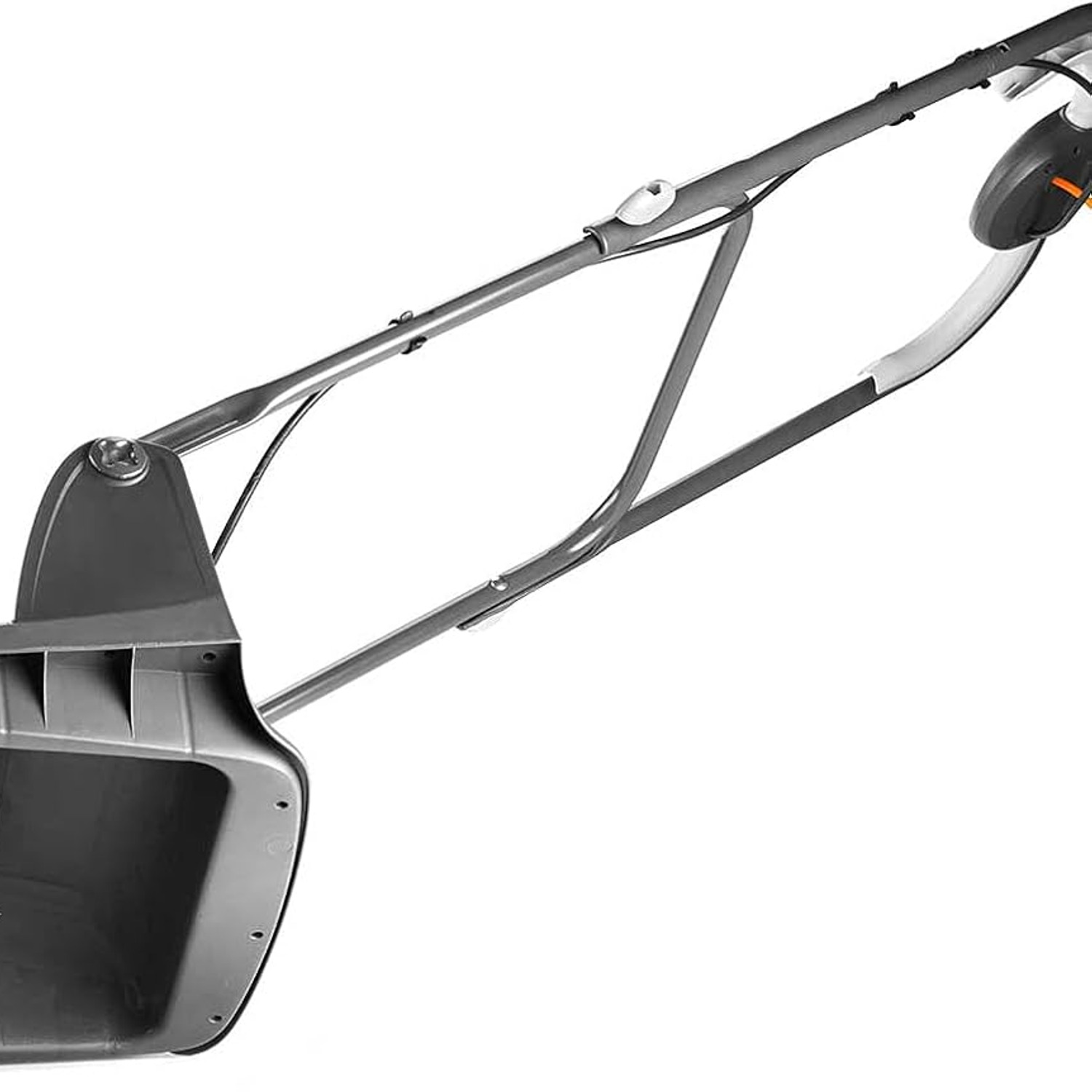
With the handle up, the mower stands 148 cm tall and takes a footprint of roughly 81 by 47 cm. Fold the handle flat and that tall profile collapses, which is the part people appreciate six months in. A mower you can stand in a corner or slide under a shelf is a mower you do not resent.
No assembly is required. It arrives ready to unfold.
Corded, and why that is often fine
There are three ways to power a mower. Petrol, battery, mains.
Petrol gives you range and power, and in exchange you get fuel storage, fumes, noise, spark plugs and a pull cord that will one day refuse to cooperate. Battery gives you freedom from the cable, and in exchange you get charge times, run-time limits and a pack that costs real money to replace in a few years.
Mains power gives you neither of those problems. You plug in and the mower runs at full output for as long as you want. There is nothing to charge, nothing to mix, nothing to service. For a small garden where the furthest corner is twenty-odd metres from the house, the cable is a minor inconvenience rather than a dealbreaker.
This mower has a permanently attached 50 cm cable that connects to your own extension lead. The extension is not included, which actually works in your favour. You pick a length that suits your garden instead of being stuck with whatever the box contained. Measure the distance from your outdoor socket to the far corner, add a few metres of slack, and buy an outdoor-rated lead to match.
Technique helps too. Start at the socket end and mow away from it, so the cable trails behind you rather than lying in front of the blade. After a couple of sessions you stop thinking about it.
Who this suits
Think about your garden honestly.
If you have a courtyard lawn, a front strip, a terraced garden with small level changes or a bank beside a path, a hover mower is a good fit. The same goes for anyone who has grown tired of engine maintenance and just wants to plug in and cut. People who find a heavy wheeled mower hard on their wrists and shoulders often find the floating action noticeably easier.
If you are mowing a large open paddock-sized area, a 36 cm electric mower will feel slow and your extension lead will run out of reach. That is a job for something bigger. And if the lawn is permanently rough with deep ruts and long tussocks, no hover mower will give you a neat finish.
Choosing well
A few questions sort most of it out.
How big is the lawn, roughly in paces? Under a couple of hundred square metres and a 36 cm width is comfortable.
Where are the sockets? If the only outdoor power is at the back of the house and the lawn is at the front, work out the cable run before you commit.
Where will it live? Measure the shed or cupboard. The folded footprint matters more than the standing height.
Can you lift 6.9 kg comfortably? Most people can, but it is worth asking if you will be carrying it up and down steps regularly.
Finally, be realistic about mowing frequency. Hover mowers like a lawn kept in rhythm. If you cut every week or two in growing season, this style of mower will look after you.
Looking after it
The routine is short, which is the point.
Unplug before you touch anything. Let the motor cool, then brush clippings off the base and clear the air intake so the hover action stays strong. A wooden scraper or stiff brush is better than fingers near a blade.
Keep water out of the motor housing. A damp cloth on the body is fine, a hose aimed at the vents is not.
Check the cable every time you get it out. Look for nicks, crushed sections or exposed wire. A damaged lead is the single most common hazard with any corded garden tool, and it costs nothing to spot early.
Store it indoors, folded flat, somewhere dry. Coil the cable loosely rather than winding it tight around the handle, which stresses the wire over time.
The mower carries a 2-year warranty, so keep your proof of purchase somewhere you will find it again.
Before you mow
Walk the lawn first. Pick up stones, dog toys, fallen twigs and anything else that could get thrown by a spinning blade. Wear closed shoes. Keep children and pets indoors or well clear while you work.
On a slope, mow across the face rather than straight up and down, and keep the cable on the uphill side and behind you. If the grass is wet, wait. Wet grass clogs the base and wet ground is where slips happen.
The short version
This is a 36 cm corded electric hover mower weighing 6.9 kg, built on an ABS base, finished in black and orange, with a flat-folding handle and no assembly needed. It plugs into a mains extension lead through a short attached cable and comes with a 2-year warranty.
It is built for the awkward lawn, the small lawn and the sloping lawn. If that is your garden, floating beats rolling.