
The complete guide
Choosing a Corded Electric Lawn Mower, A Practical Buyer's Guide
The weekly lawn problem
Lawns do not wait. Give grass a week of warm weather and a bit of rain and it will double in height, and the job you were putting off becomes twice as hard. Most of the excuses people make for skipping a mow have nothing to do with the grass. They have to do with the mower.
Petrol mowers need fuel, they need the pull cord yanked three or four times, and they sulk after a month in the shed. Battery mowers are lovely until you discover the pack has drained itself flat and you are now waiting ninety minutes to cut a lawn that takes twenty. A corded electric mower removes both problems. The power is already there, in the wall, waiting. You plug in, squeeze the handle and start walking.
That instant-start reliability is the main reason a mains powered lawn mower still earns its place in a suburban shed, even with batteries getting better every year.
How a corded mower actually works
The mechanics are simple, and simple is why they last. An electric motor sits inside the deck and spins a horizontal blade very fast. That blade slices the grass as you push forward, and the airflow it generates lifts the clippings up and back into the grass box. Power comes from a wall socket down an extension lead.
Because there is no combustion engine, there is a long list of things you never do. No fuel to buy or store. No oil to change. No spark plug, no air filter, no carburettor to clean after the mower has sat idle all winter. The motor either runs or it does not, and in practice they run for years with nothing more than a brush-down after each mow.
On this Bosch model, the motor is described as energy-efficient, meaning it is tuned to draw power sensibly rather than running at full tilt from the moment you squeeze the handle. For a machine that might be running for twenty or thirty minutes a week across a whole season, that adds up.
Why 37cm is a useful deck size
Cutting width is the single most important number on a mower spec sheet, and 37 cm sits in a genuinely practical spot.
Go narrower, around 30 cm, and you spend a lot more time walking laps. On anything bigger than a courtyard it starts to feel like hard work. Go much wider, up past 45 cm, and the mower gets heavier, harder to turn and awkward to squeeze down a side path or between a shed and a fence.
A 37 cm deck cuts a decent strip per pass but still pivots easily around garden beds, play equipment and the washing line. If your lawn is a front strip and a back square, the sort of block most houses sit on, this is the width most people end up happy with. It is also why the best 37cm lawn mower searches tend to come from people with normal suburban yards rather than acreage.
Getting a clean edge
The thing that separates a tidy lawn from a scruffy one is usually the edges. Grass growing right against a path, a wall or a fence tends to lean over rather than stand up, and a plain mower deck will ride straight over the top of it, leaving a shaggy fringe.
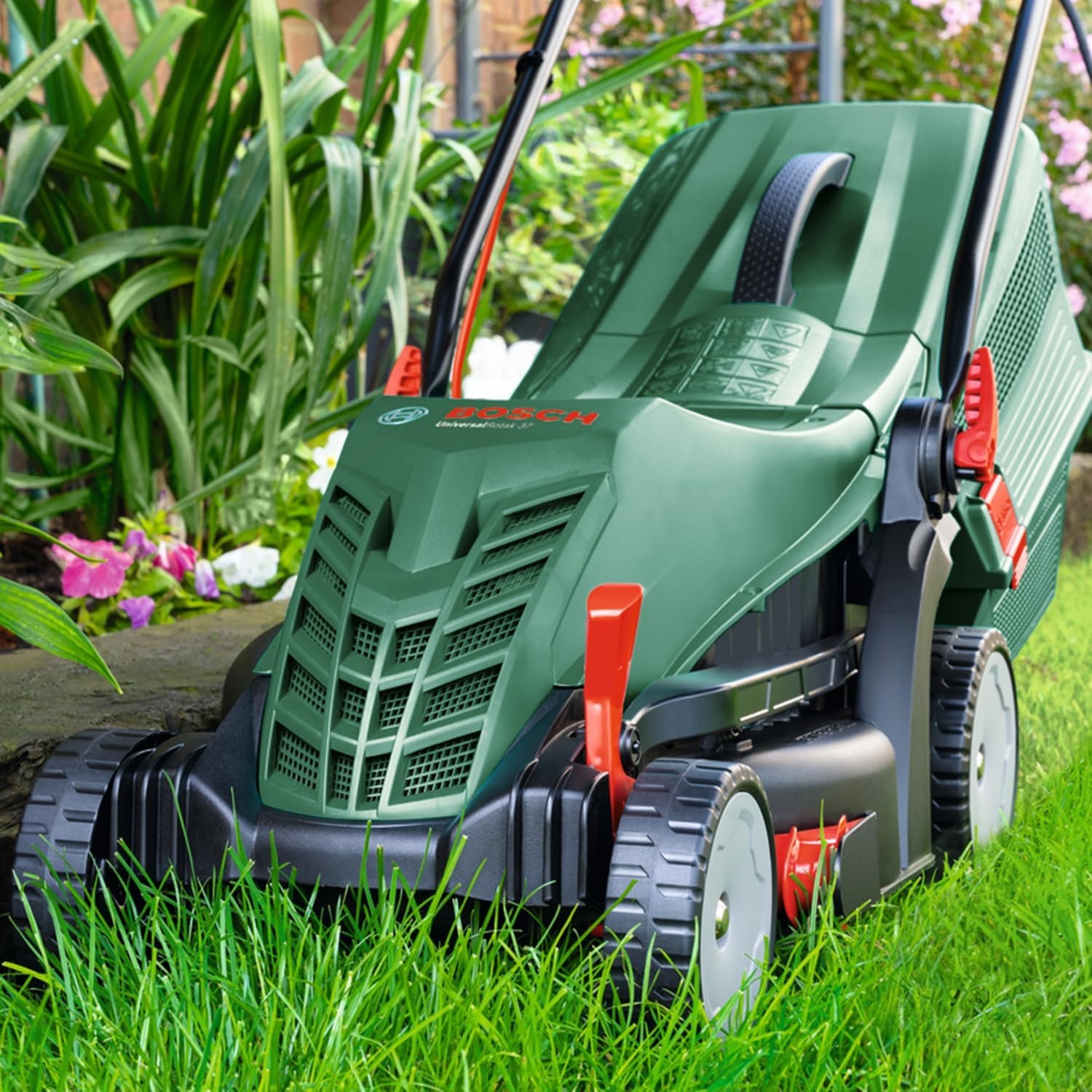
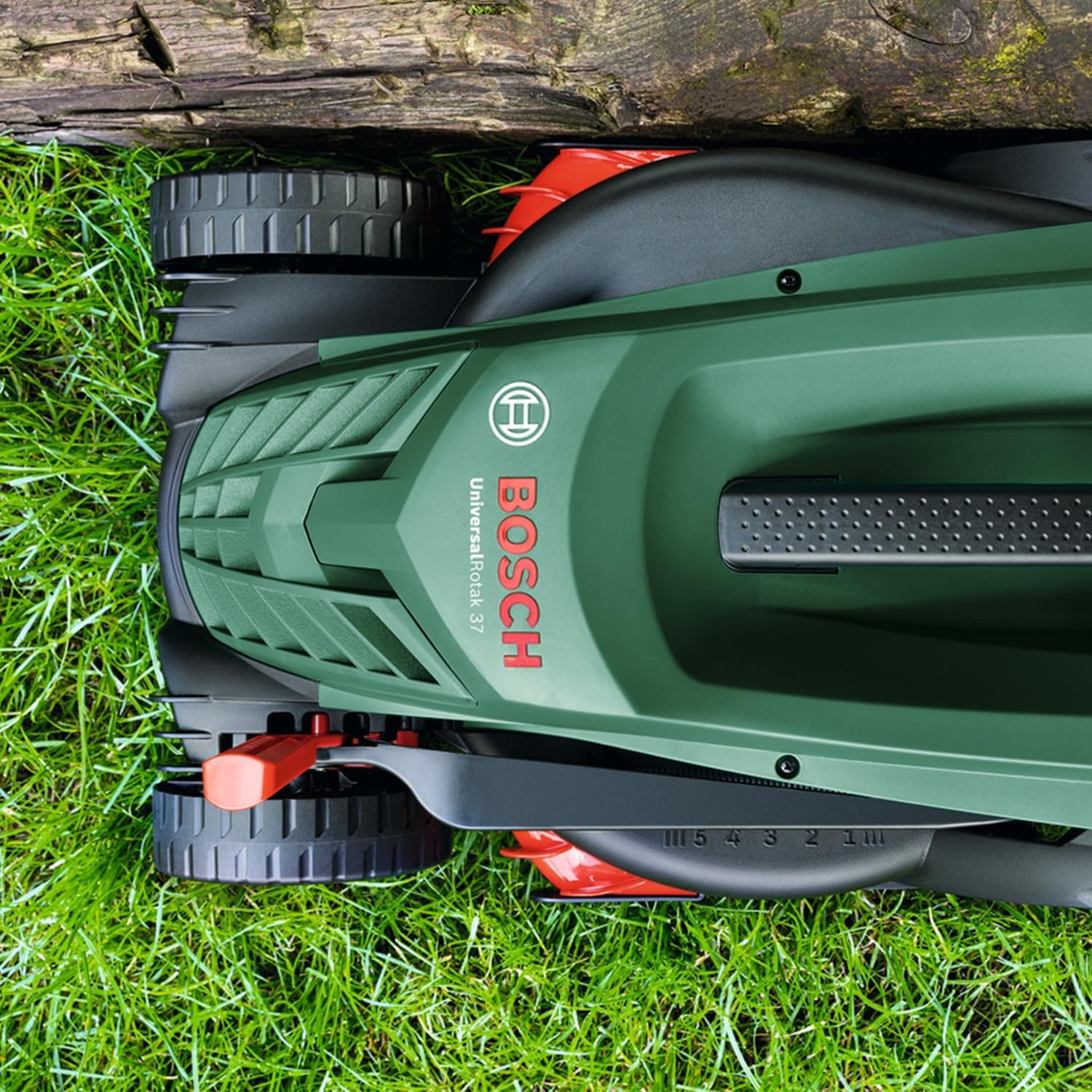
Grass combs solve part of that. They are small fingers set along the front edge of the deck that catch the leaning growth and lift it up into the path of the blade. The result is a cut that goes much closer to the boundary than it otherwise would. You will still want a trimmer for corners, around posts and along steps, but the strip left for the trimmer gets a lot thinner. For anyone chasing the best mower for edge cutting without buying a separate edger, that is a real time saving.
Collection and the grass box
This mower comes with a grass box, which means clippings are gathered as you go. There are two good reasons to collect rather than leave the cuttings on the lawn.
The first is appearance. A collected lawn looks finished the moment you stop. The second is grass health. In damp conditions, loose clippings mat together into a wet layer that blocks light and traps moisture against the crown of the grass. That is how you end up with yellow patches and fungal problems.
Emptying is straightforward. Lift the box off, tip it into the compost or the green bin, clip it back on. On a dry week with a small lawn you might only do that once or twice. On a lush spring mow after rain, expect more stops, which is normal for any lawn mower with grass catcher rather than a fault with the machine.
Living with the cord
The honest downside of corded mowing is the cord, and it is worth being clear about it. You need an outdoor-rated extension lead long enough to reach the furthest corner of your lawn with slack left over, and you need a routine so the lead never ends up under the blade.
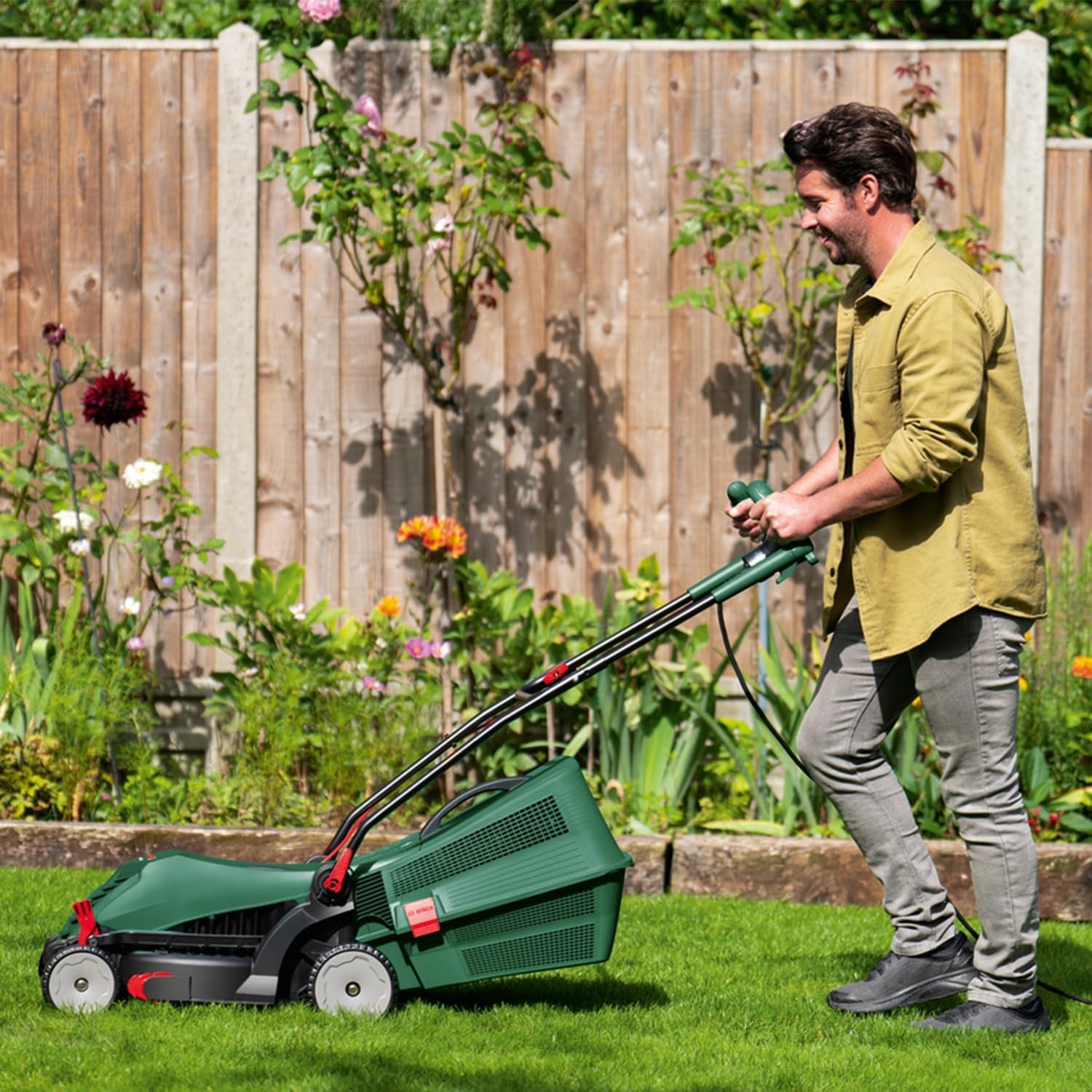
The routine is easy once you have done it twice. Start at the power point. Mow away from the socket, not towards it. Keep the lead draped over the shoulder on the side you have already cut, so it always lies on short grass behind you. Work in long parallel runs rather than random circles. Within a mow or two it becomes automatic, and most people stop noticing the cord entirely.
If your lawn wraps around three sides of the house with no outdoor power on two of them, a corded mower is the wrong tool and a battery model will serve you better. If you have a socket on the back wall and a lawn you can reach from it, a plug in lawn mower is the simpler life.
Weight, storage and handling
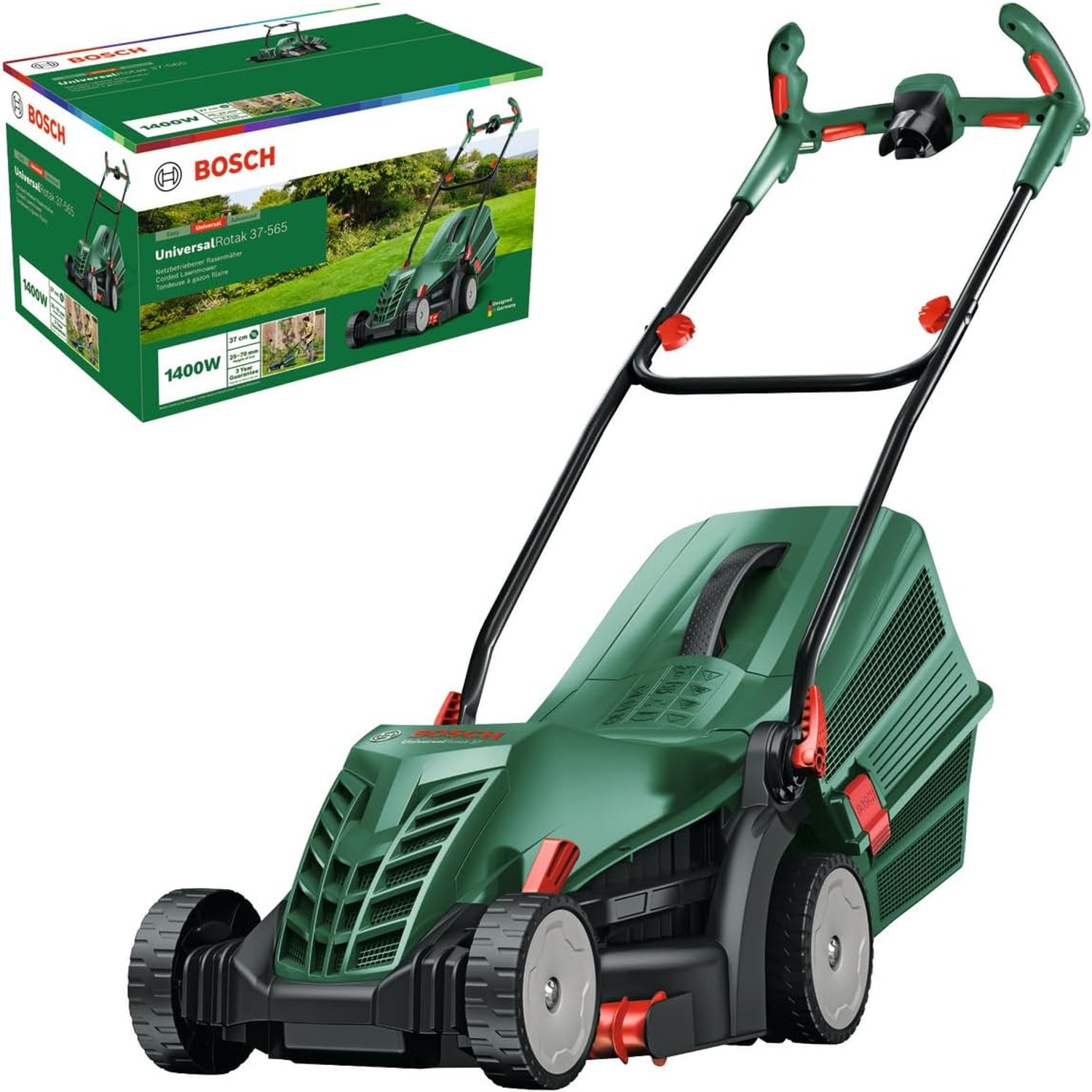
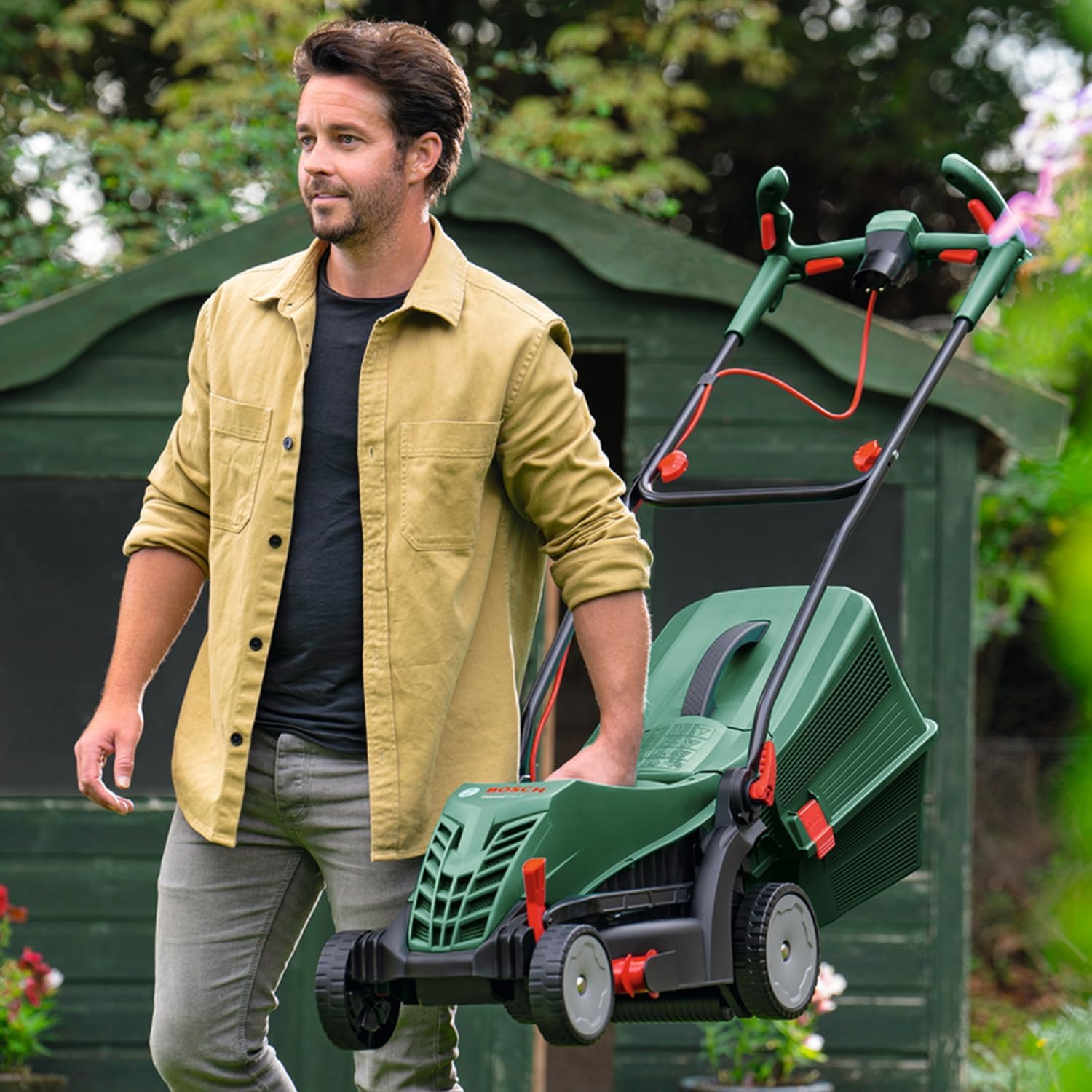
At 16.1 kg, this sits firmly in the manageable range. You can lift it up a step, swing it over a garden edge, or get it into a car boot to help a neighbour. It is not so light that it skates over uneven ground, and not so heavy that turning it at the end of a run is a chore.
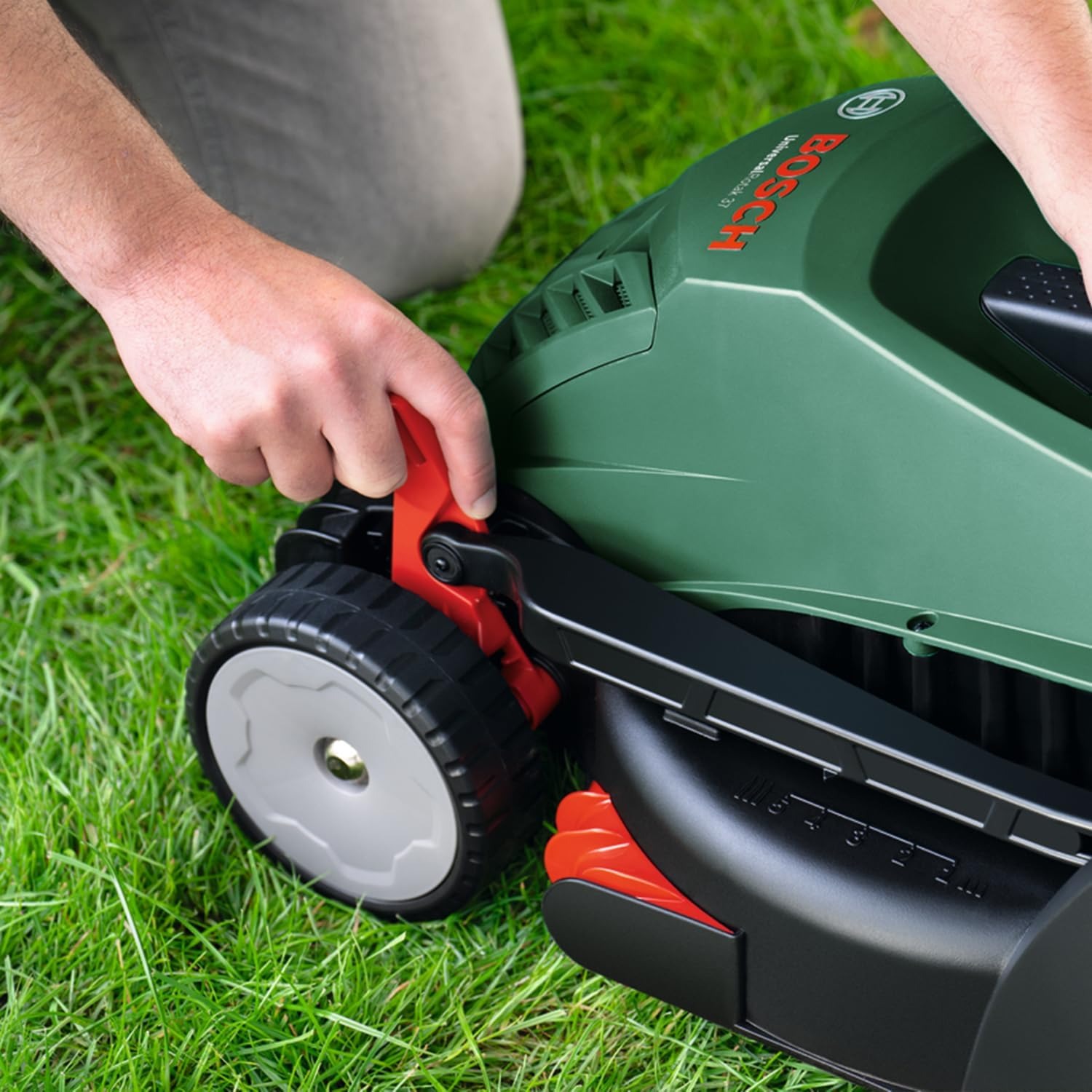
Storage is where the folding handles earn their keep. The listed dimensions of 134 by 40 by 106 cm are with the handles up, and that is a sizeable footprint for a small shed. Fold them down and the whole machine collapses into something you can stand in a corner, slide under a workbench or tuck beside the bikes. If shed space is tight, a compact storage lawn mower is worth more than an extra few centimetres of cutting width.
Keeping it running well
Maintenance on a corded mower is close to nothing, but close to nothing is not actually nothing.
Unplug it before you touch anything, every single time. Then brush or scrape the clippings off the underside of the deck while they are still damp, because dried grass sets like cement and builds up until it restricts airflow and hurts collection. Empty and rinse the grass box, then let it dry before you clip it back on, or you will find it smelling unpleasant next week.
Check the extension lead for nicks, cuts or exposed wire before each use, and retire it if you find any. Store the mower somewhere dry and under cover. When the cut starts looking ragged or the grass tips brown off a day after mowing, the blade is dull and should be sharpened or replaced by a qualified service agent rather than filed at home.
The short version
If your lawn is small to mid-sized and sits within extension-lead reach of a power point, a corded mower is the lowest-fuss option available. There is no fuel, no charging, no seasonal servicing ritual, and it starts every single time.
This Bosch model gives you a 37 cm cut that suits a normal suburban lawn, grass combs that get you closer to the edges, a grass box that keeps clippings off the turf and folding handles that let you store it in a shed that is already full. At 16.1 kg with no assembly required, it is ready to work the day it arrives.
The trade-off is the cord, and you should decide honestly whether that suits your yard. If it does, this is a mower you will stop thinking about, which is exactly what most people want.