
The complete guide
Buying a Bare Tool Cordless Mower, Explained
The problem with buying another mower
Most people replace a mower for one of two reasons. Either the old petrol one will not start, or they are tired of the whole routine around it. Fuel cans in the shed. Oil that needs changing. A pull cord that works on the fifth yank. Fumes blowing back at you on a still afternoon. The grass still grows either way, so the job does not go away.
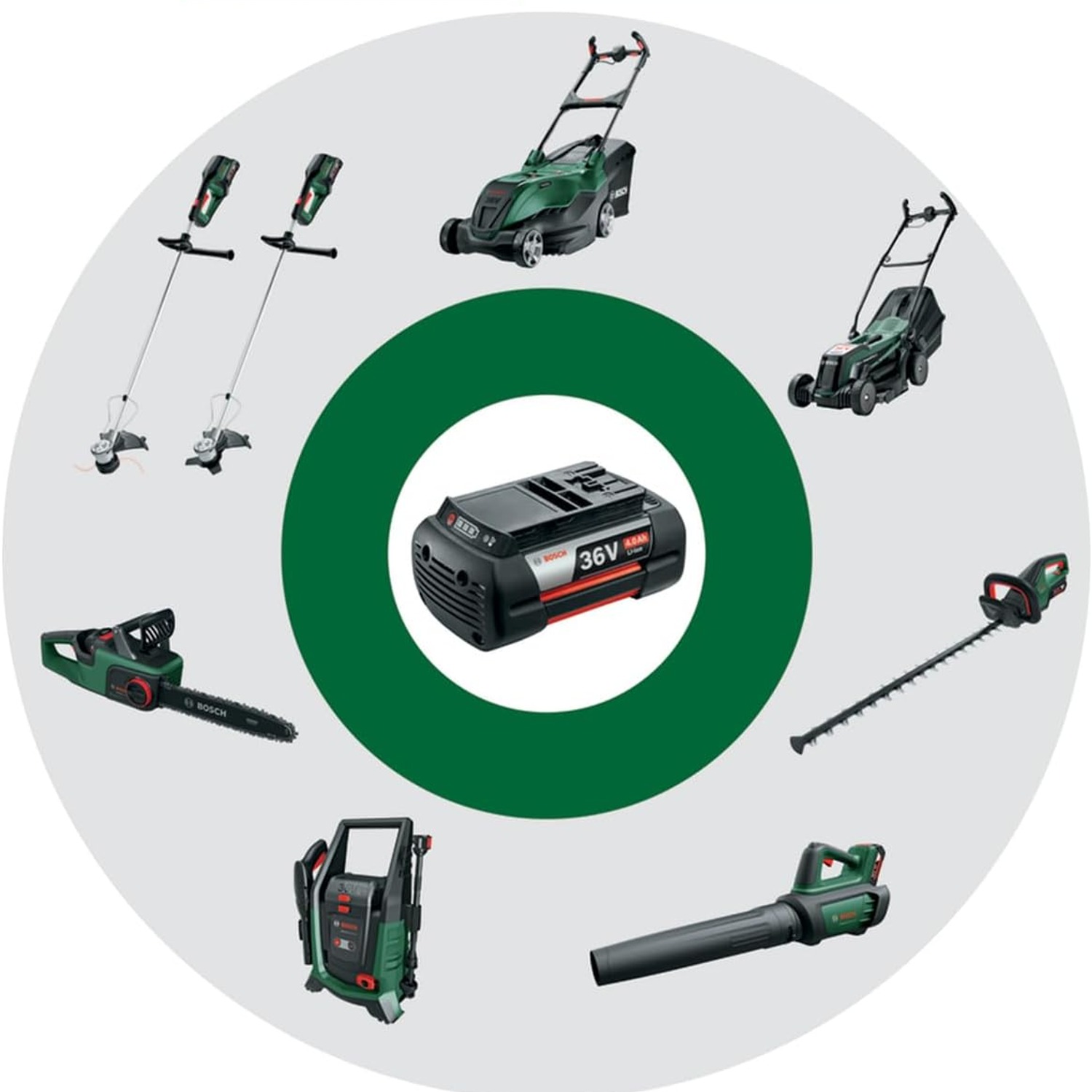
Battery mowers solved most of that years ago. The catch now is a different kind of waste. Every cordless tool you buy seems to come with its own battery and its own charger, and after three or four purchases you have a drawer full of packs that mostly sit flat. You are paying for the same component over and over.
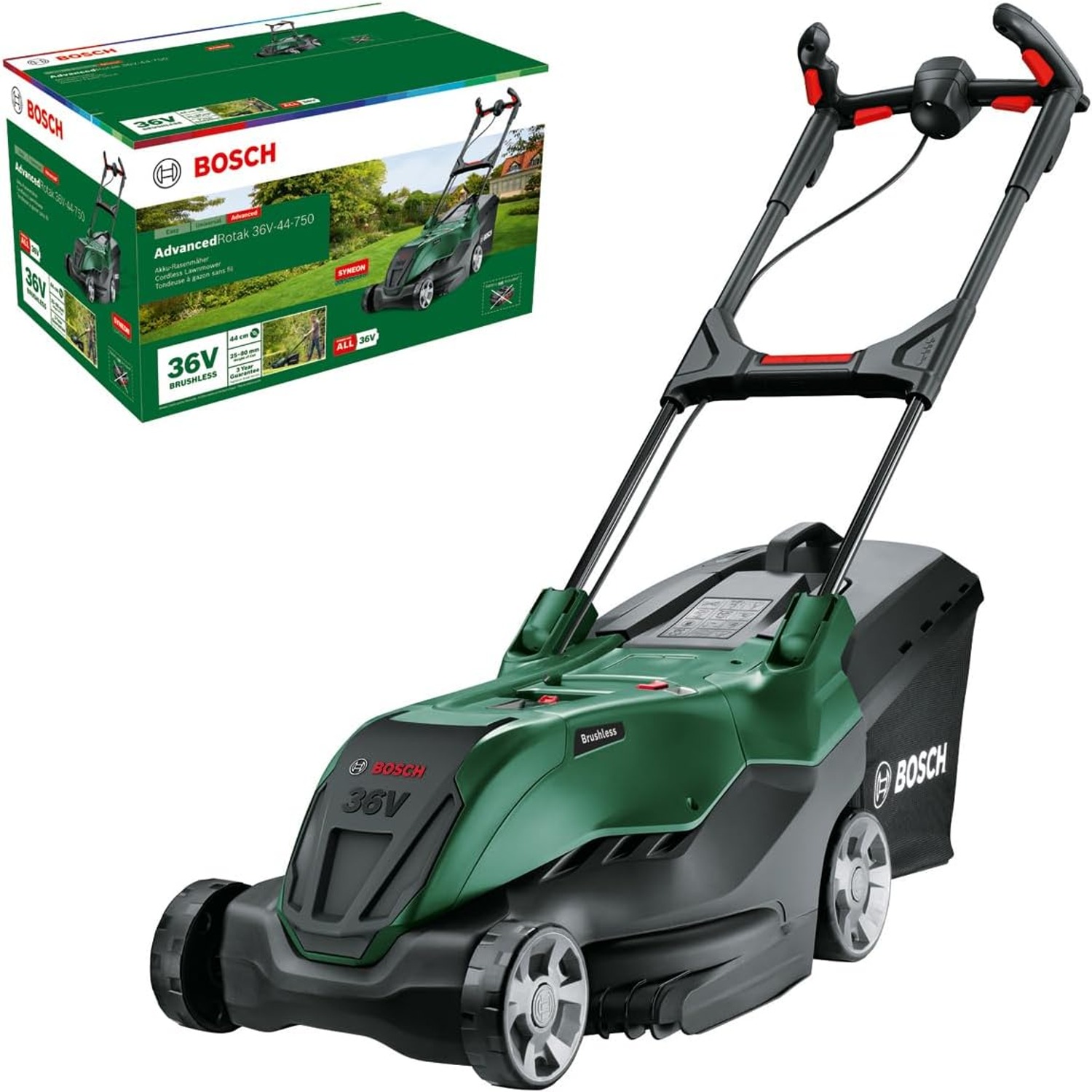
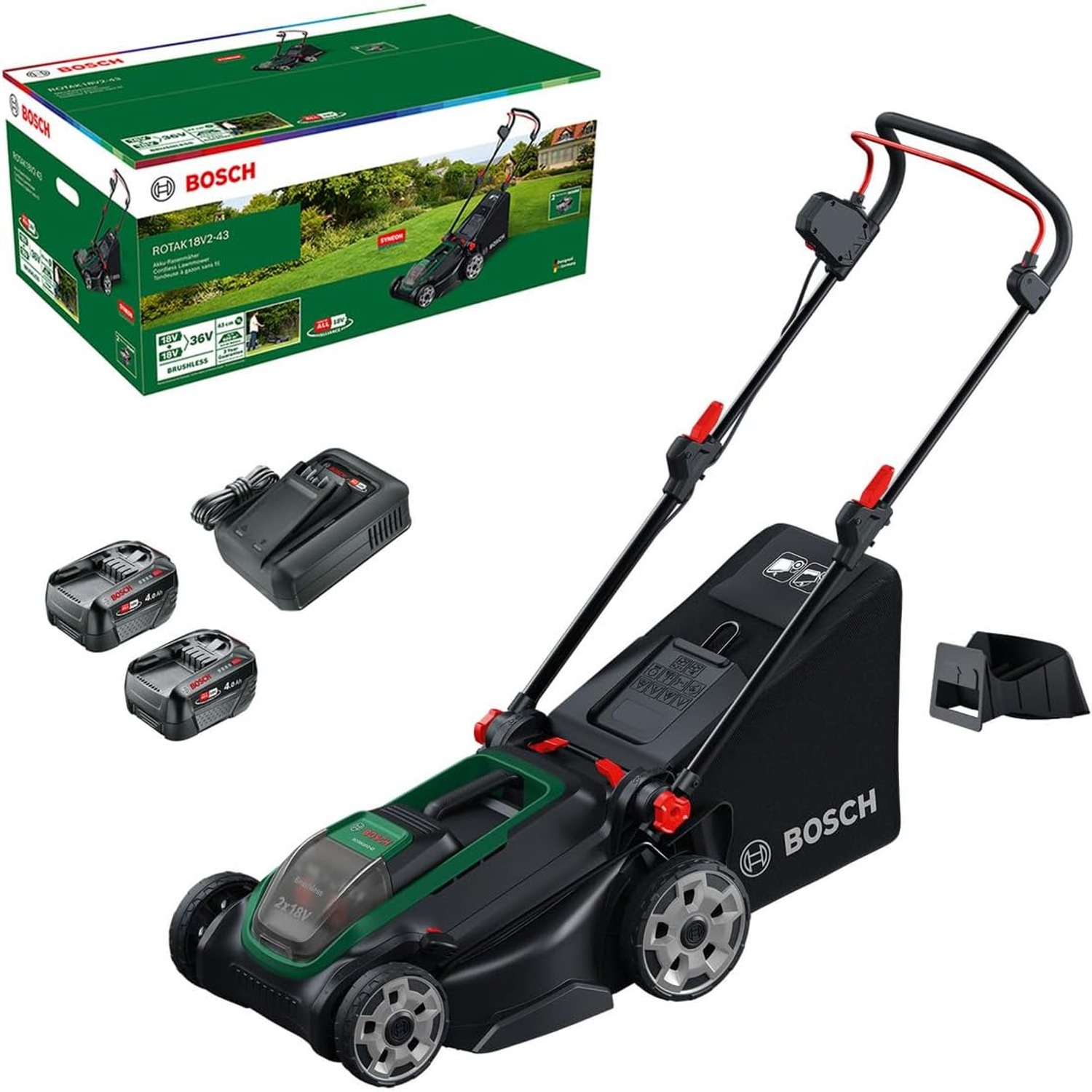
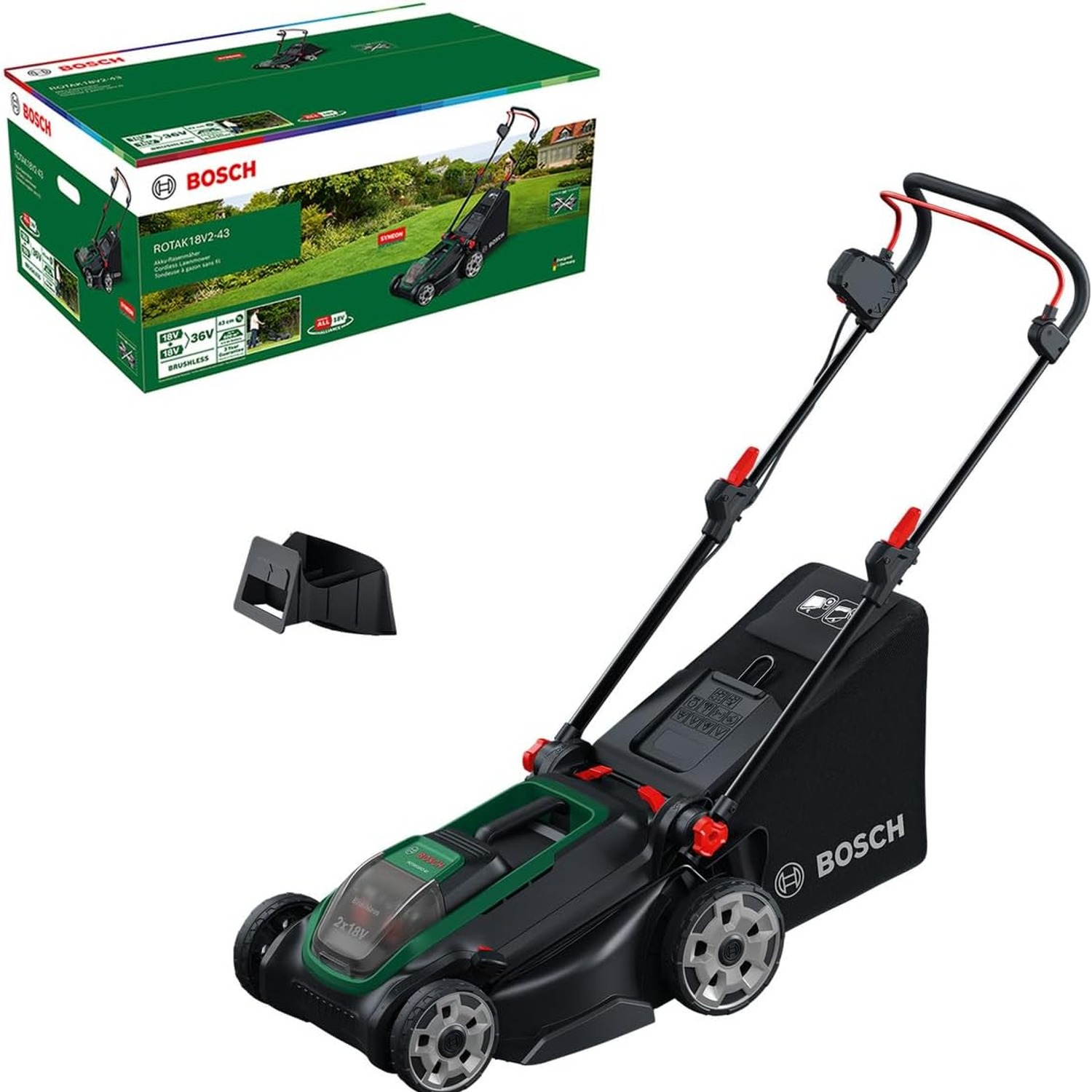
That is the whole argument for a bare tool. This listing is the Bosch AdvancedRotak 36V-44-750 supplied as the mower body only, under the style "Without Battery". No pack, no charger, just the machine. If you already own 36V batteries in the matching system, you have skipped the most expensive part of the purchase.
How a brushless battery mower actually works
Inside an older motor there are carbon brushes pressing against a spinning part to pass current through. They wear down. They create friction and heat. On a mains tool that mostly costs you maintenance. On a battery tool it costs you runtime too, because wasted energy is energy that is not turning the blade.
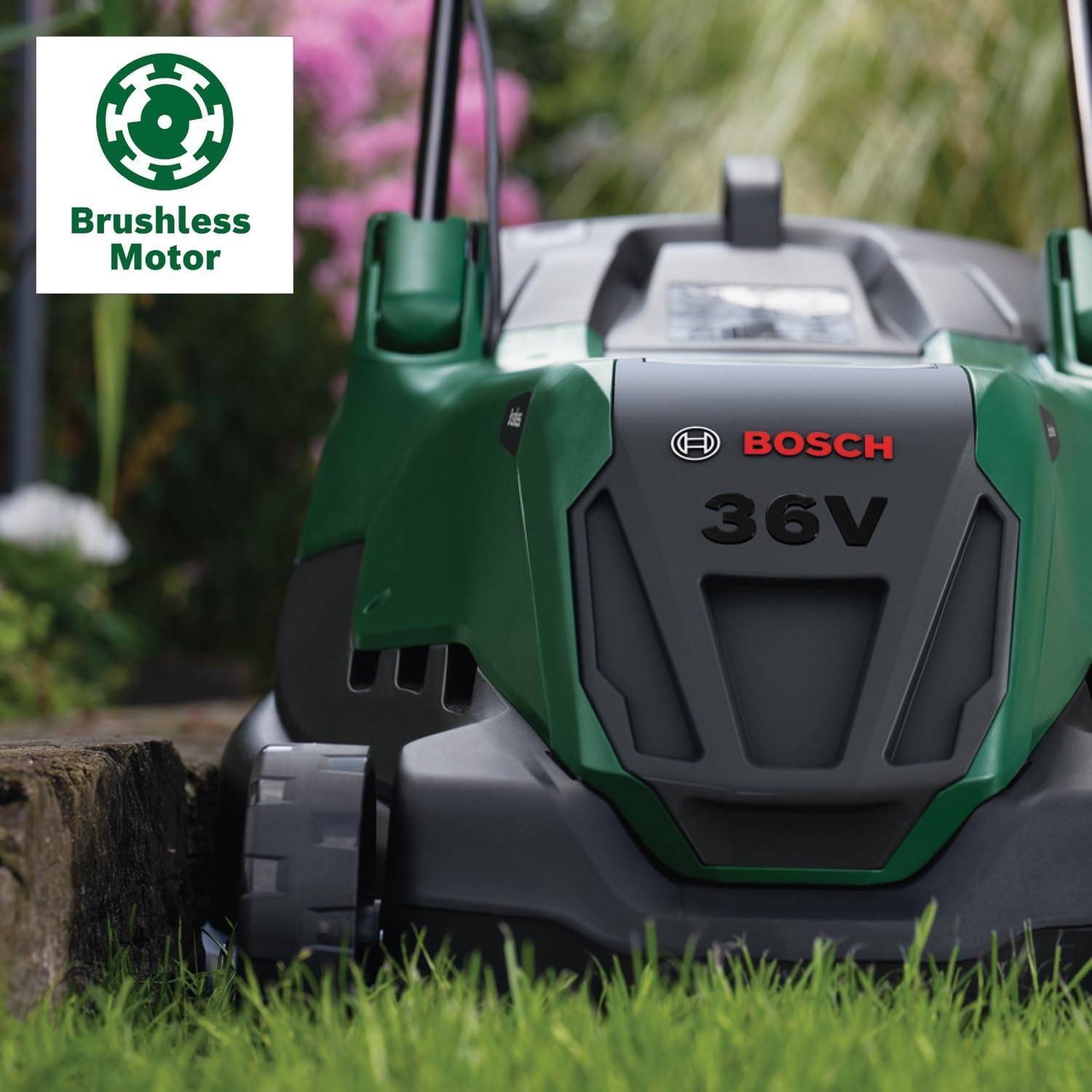
A brushless motor uses electronics to switch the current instead of physical contacts. Nothing rubs. The motor runs cooler, lasts longer and turns more of the battery's charge into cutting power. On this mower that is paired with Bosch's Syneon power management, which varies how hard the motor pulls based on what it is cutting. Thin grass on a dry lawn does not need the same draw as a thick patch near the tap.
The result is simple from where you stand behind the handle. The motor does not bog down as easily, and you get more lawn done per charge than you would from an older brushed design on the same pack.
Reading the numbers that matter
Cutting width. This one is 44cm. That number decides how many passes your lawn takes. Narrower decks mean more laps. Much wider decks save laps but get awkward the moment you have to steer around a tree, a clothesline post or a raised bed. For a typical suburban lawn, 44cm lands in a sensible spot, which is why the best 44cm cordless mower searches turn up so often from people with average-sized blocks.
Cutting heights. Seven positions, from 25mm at the lowest to 80mm at the highest. That range is more useful than it sounds. In spring, a shorter cut keeps the lawn dense and tidy. Through summer heat, raising the height leaves more leaf to shade the soil, which holds moisture and keeps the grass greener for longer. Shady areas under trees also do better left longer. Being able to change that in a few seconds means you are working with the season instead of against it.
Weight. 15kg. Light enough to lift into a boot, carry up a step or hang on a wall bracket. It is a push mower, listed as manual operation, so weight is also what your arms feel at the end of every run. On flat ground 15kg is easy going.
Size. 76 x 50 x 47cm as supplied. The handles fold, so measure the corner of the shed you plan to use and you will know straight away whether it fits.
Who this suits
Think about the lawn first. If you have a small front strip, a courtyard, or a standard suburban backyard, this is well matched. People who search for the best cordless lawn mower for small gardens are usually describing exactly this kind of space.
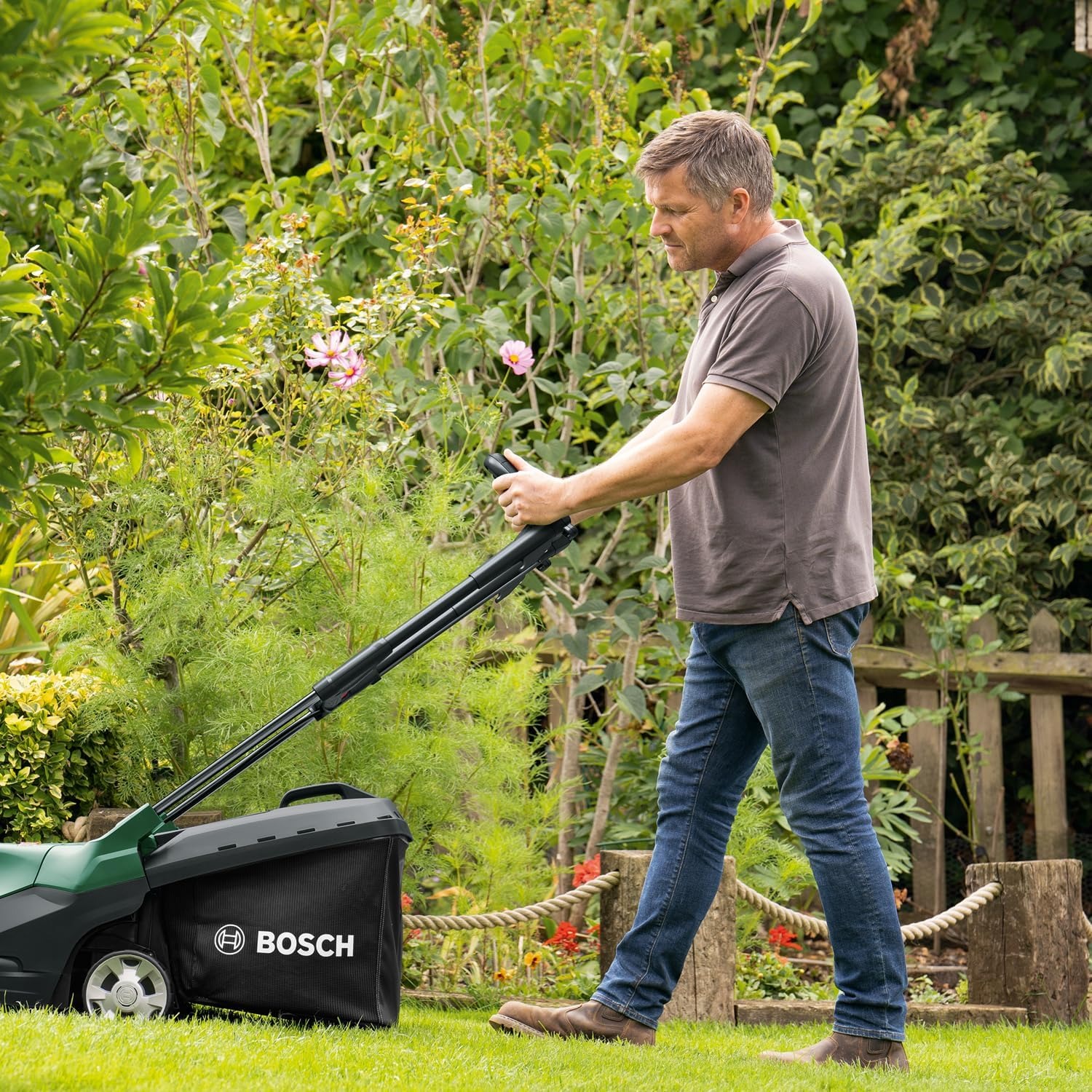
It also suits anyone who wants mowing to be a quieter job. No engine, no exhaust, no warm-up. You fit the pack, press go, and the thing runs. That is a real difference if you mow on a weekend morning in a street where the houses are close together.
Older gardeners tend to like battery mowers for the same reasons. Nothing to pull-start, nothing heavy to lift and pour, and 15kg instead of 30kg.
Where it is less suited is the big block. A large lawn needs either a much wider deck, a self-propelled drive, or several batteries on rotation, and often all three. There is no shame in knowing your lawn is too big for a 44cm push mower.
Choosing the right battery to pair with it
This is the part people skip, and then they are disappointed. The bare tool is only as good as the pack you fit to it.
Two things decide your runtime. The first is the amp-hour rating of the battery. A bigger number means more stored energy and more minutes of cutting. The second is the lawn itself. Long grass, damp grass and thick growth all pull harder on the motor and drain the pack faster than a light weekly trim.
If you mow weekly and never let the lawn get away from you, a single good-sized pack will usually see you through. If you tend to skip a fortnight when the weather is bad, think about a second battery so you can swap rather than stand around waiting on a charger. That is the honest trade-off with cordless gear, and it is better to plan for it than discover it halfway across the yard.
One more thing. Check the fitment of your existing batteries against this machine before ordering. Voltage alone is not a guarantee of compatibility across brands.
Looking after it
Battery mowers are low maintenance, not no maintenance.
Pull the battery out before you touch anything. Do that every single time, even for a quick look underneath, because the blade only needs to turn once to cause damage.
Clear the clippings off the underside of the deck after each mow. They build up into a hard layer that chokes airflow, and poor airflow means grass does not lift properly into the bag. A paint scraper and a stiff brush do the job. Avoid blasting water at the motor housing.
Keep the blade sharp. A blunt blade tears the grass rather than cutting it, and torn tips go brown within a day or two. If your lawn looks whitish-brown after mowing, the blade is the first thing to check.
Empty the grass bag and let it dry out rather than leaving damp clippings in it. Fabric bags go musty and the mesh clogs, which kills collection performance.
Store the mower dry and covered. Keep batteries indoors at normal room temperature, not in a freezing shed over winter or a baking one in summer. Heat and deep cold both shorten battery life.
The short version
This is the mower body only, with no battery and no charger. It uses a brushless 36V motor, cuts 44cm wide, and offers seven height settings between 25mm and 80mm. It weighs 15kg, has a metal deck, and comes with a grass collection bag that tells you when it is full.
If you already own compatible 36V packs, this is the cheaper way into a quiet, fume-free mow on a small or mid-sized lawn. If you do not own any yet, price a battery and charger alongside it before you compare it to a complete kit. Do that sum first, and you will know in about a minute whether this is the right buy for you.